
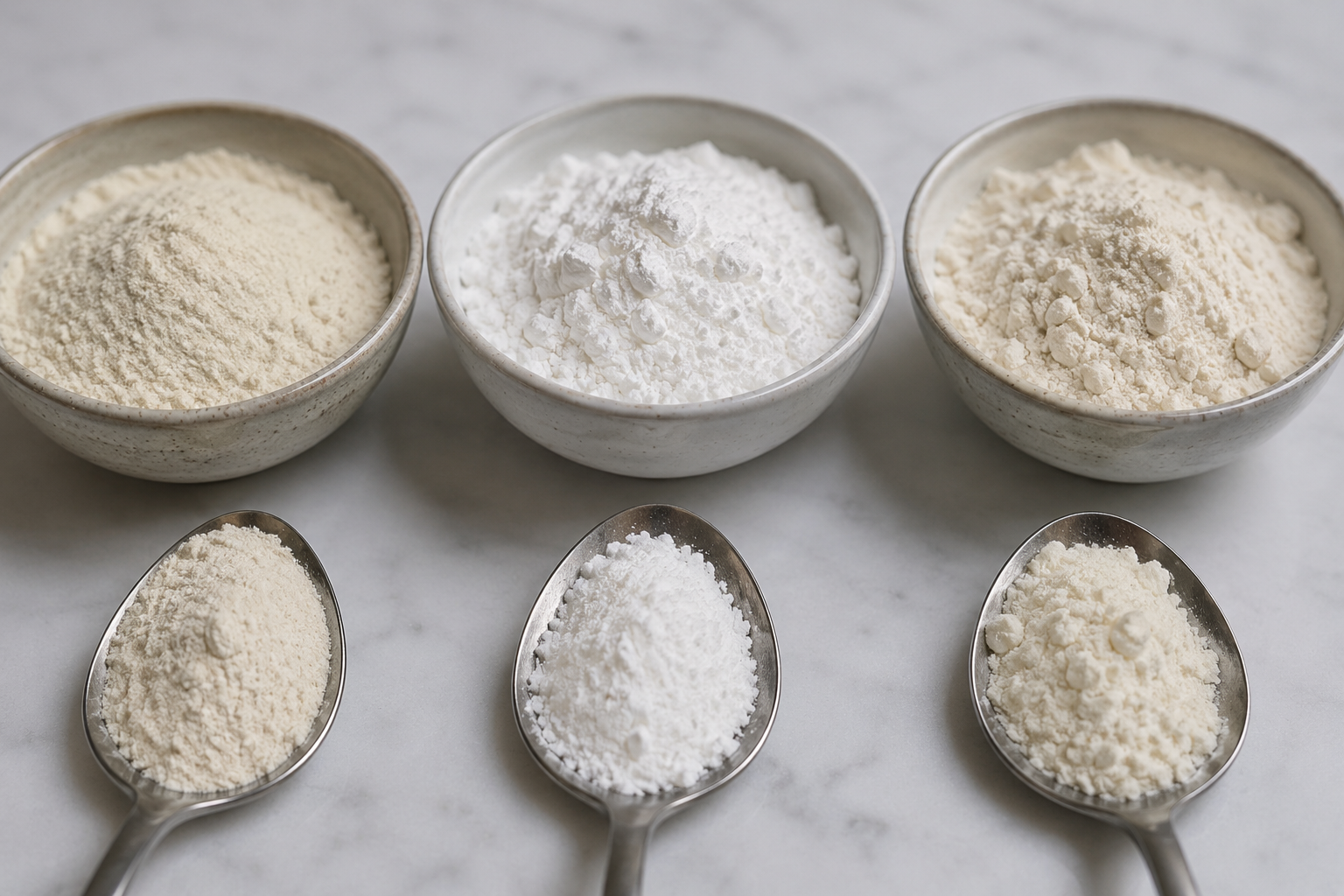
Three of the most commonly used hydrocolloid raw materials in the food industry, xanthan gum, guar gum and locust bean gum, are gaining importance every year. With growing demand for plant-based products, clean labels and stable textures, these three gums have become indispensable across a wide range of applications. However, their prices, availability and functionality differ significantly. Here is an overview of the market in 2026.
Market Overview and Price Trends
Xanthan gum is a microbial polysaccharide produced by fermentation of the bacterium Xanthomonas campestris. The xanthan gum market in 2026 is estimated at between $800 million and $1.1 billion, with expected annual growth of 3.5 to 7 percent through 2034. In the second quarter of 2026, xanthan gum prices in Europe were around $2,800 per tonne, while in the United States they were slightly higher, and in China slightly lower.
Guar gum is derived from the seeds of the guar plant, which is mainly grown in India and Pakistan. The guar gum market in 2026 is estimated at around $1.5 billion, with expected annual growth of around 6.6 percent. Guar gum prices in the second quarter of 2026 were significantly lower than xanthan, making it the most affordable option on the market. On India's NCDEX exchange, guar gum futures for August 2026 show relative stability.
Locust bean gum is derived from the seeds of the carob tree, which grows in the Mediterranean region. The locust bean gum market in 2026 is estimated at around $330 million, with expected annual growth of around 3 percent through 2031. Locust bean gum is traditionally the most expensive of the three gums, with prices significantly higher than xanthan and guar.
Guar gum is currently the most affordable option, with prices multiple times lower than locust bean gum. Xanthan gum falls somewhere in between, but is significantly more expensive than guar gum. Commodity-grade hydrocolloid prices in Europe today range widely, depending on the polymer type, with commodity-grade guar gum available at significantly more favourable prices than others.
Functionality and Applications
Xanthan gum is the most versatile of the three. It performs well across a wide pH range, is stable at high temperatures and provides high viscosity at low dosages. It is used in dressings, sauces, beverages, bakery products and gluten-free formulations. Its advantage is that it is suitable for both cold and hot processes. This makes it the first choice for manufacturers seeking a universal solution.
Guar gum hydrates faster than xanthan and provides high viscosity, but is less stable at high temperatures and in highly acidic environments. It is therefore most commonly used in cold processes, such as ice cream, dairy products, sauces and dressings. Its low price makes it attractive for manufacturers seeking a cost-effective solution. Guar gum is often used in combination with other hydrocolloids to achieve the optimal effect.
Locust bean gum hydrates slowly and requires heating to achieve full viscosity. It has exceptional water-binding capacity and provides a creamy texture that is difficult to achieve with other raw materials. It is often used in combination with xanthan or carrageenan, as it has a synergistic effect with other hydrocolloids. Due to its high price, it is mainly used in premium products, such as ice cream, cheeses, plant-based milk alternatives and desserts.
Availability and Supply Risks
Xanthan gum is produced by fermentation, meaning its production capacities are not subject to weather conditions like agricultural crops. However, production is concentrated in a few countries, primarily China, the United States and Europe. Capacity expansion in China and India could lead to price declines in the coming years. On the other hand, dependence on imports and concentrated production represents a potential risk for supply chains.
Guar gum depends on agricultural production in India and Pakistan, making it susceptible to weather conditions. Droughts in this region can dramatically reduce supply and drive up prices, as happened in 2012. In 2026, guar gum exchange prices show relative stability, but any change in weather conditions in this region can quickly alter the market situation.
Locust bean gum depends on the carob harvest in the Mediterranean region, primarily in Spain, Italy, Portugal and Morocco. Production is limited and susceptible to climate change, making this market particularly sensitive. Due to limited quantities and concentrated production, locust bean gum is the most risky for supply of the three gums.
How to Choose the Right Gum?
The choice depends on several factors. If the primary goal is cost, guar gum is the most affordable option. If stability at high temperatures and in acidic environments is required, xanthan gum is the better choice. If the goal is a creamy texture and synergy with other hydrocolloids, locust bean gum is unbeatable, but at a significantly higher price.
In many applications, manufacturers use hydrocolloid blends to achieve the optimal balance of cost and performance. The combination of xanthan and guar gum, for example, provides higher viscosity than either alone, allowing for lower dosages and reduced costs. The combination of locust bean gum with xanthan or carrageenan provides a creamy texture that cannot be achieved with these raw materials alone.