
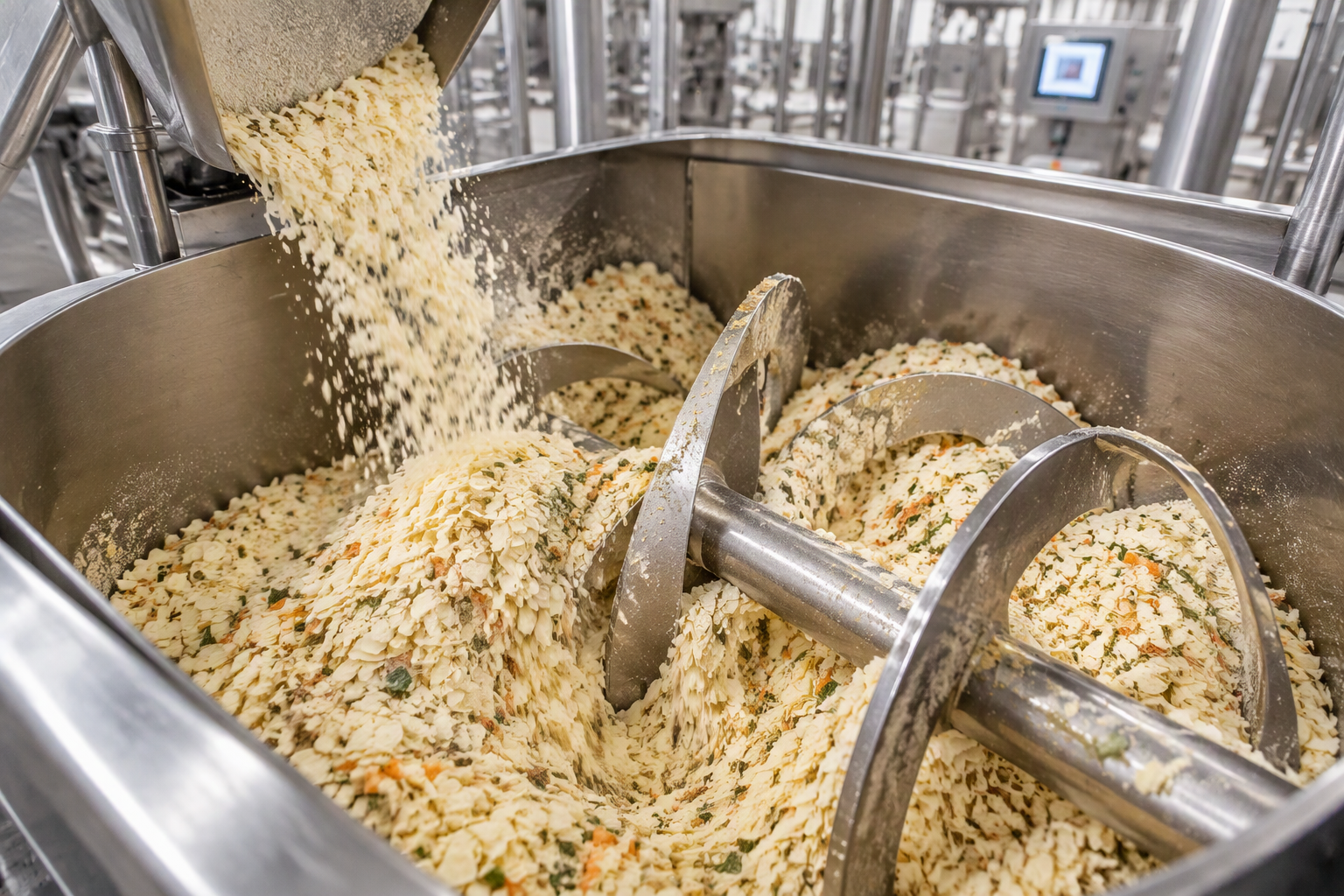
When manufacturers of instant soups and sauces look for the ideal thickener, the first thought is usually modified starch or flour. However, potato flakes offer something that these traditional ingredients often cannot achieve. They not only bind water and provide thickness, but also create a natural, creamy mouthfeel that consumers increasingly appreciate. In an era when consumers demand cleaner labels, flakes are emerging as a quiet and highly effective solution.
Why Flakes Instead of Starch
The key difference lies in the structure. While ordinary potato starch is a purified carbohydrate, flakes contain whole or partially damaged plant cells. When flakes are rehydrated in hot water or soup, they release starch gradually, but also retain the fibre and protein naturally present in the potato. This is why the gel they form is not sticky or gelatinous like pure starch, but has a fullness and a mild texture that resembles a home-cooked dish.
In addition, flakes naturally contain small amounts of mono and diglycerides left over from the production process, which aid in rehydration. In instant mixes, they act as emulsion stabilizers, preventing fat from separating on the surface of the soup or sauce during storage.
Formulation Challenges and How to Overcome Them
Although extremely useful, potato flakes are not without challenges. The most common problem technologists face is the formation of lumps when added to hot liquid. Flakes on the surface instantly hydrate and form a protective layer that prevents water from penetrating the interior. That is why the industry often uses agglomeration or dry mixing of flakes with other powdered ingredients such as salt or sugar before adding to water.
The second challenge is over-thickening during prolonged holding on heat. Unlike modified starches designed to withstand high temperatures, flakes can lose viscosity over time or become too thick if constantly stirred. The solution lies in careful dosing and temperature control. The best results are achieved when flakes are added at a temperature between seventy and eighty degrees Celsius and when the mixture is not stirred excessively.
Impact on Taste and Clean Label
From a marketing perspective, potato flakes have a major advantage because they can be listed on the label simply as potato or potato flakes. Unlike modified starches that carry E numbers, they allow products to retain clean label status. This is particularly important for premium instant soups and sauces targeting consumers who read labels.
What to keep in mind is that flakes can introduce a mild potato aroma. In vegetable or meat soups, this aroma often fits perfectly and gives the dish fullness. However, in delicate sauces that should not taste of potato, it is necessary to use more neutral flakes or combine them with spices that mask that note.
Practical Tips for Production
When formulating an instant soup or sauce, flakes typically make up between ten and twenty percent of the dry mix, depending on the desired thickness. It is recommended to first mix them with other dry ingredients, then slowly add them to the liquid while stirring constantly. If you are making a product prepared in a microwave, it is good to add a little cold water before heating so that the flakes hydrate evenly.
Also, keep in mind that flakes come in different qualities. Those with lower free starch content provide a smoother texture and are less prone to sticking, while those with higher content can provide stronger thickening. The choice depends on whether you are making a clear soup or a thick sauce.