
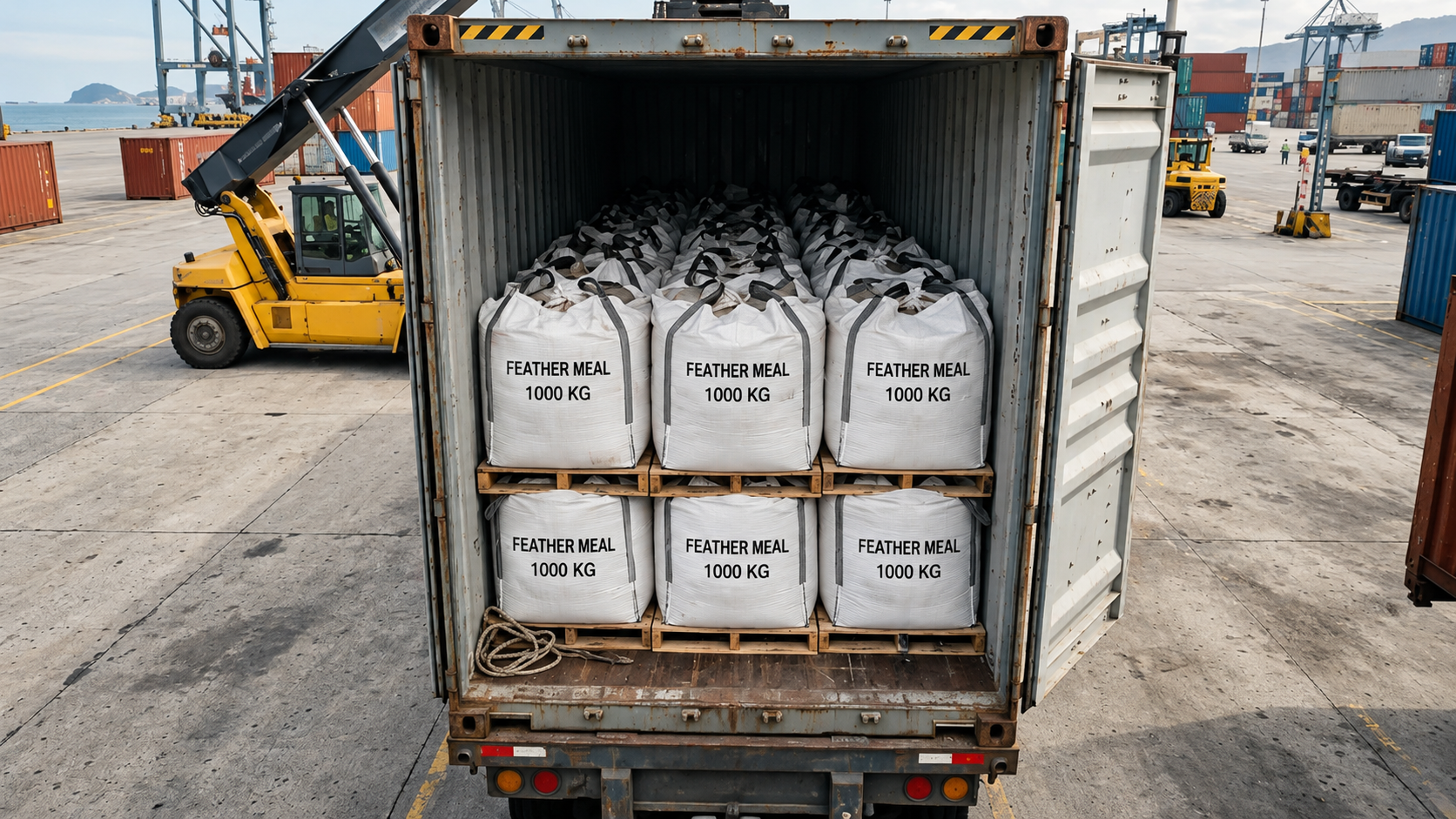
Hydrolyzed feather meal, commonly known as Feather Meal, is an animal-derived protein ingredient produced from poultry feathers. Due to its high protein content and the effective utilization of poultry processing by-products, it is used as an alternative protein source in selected animal feed formulations.
Its main component is keratin, a structural protein naturally resistant to degradation. Appropriate processing is therefore essential to improve its digestibility and nutritional availability.
Production and Characteristics of Feather Meal
Feather Meal is produced from feathers collected during poultry processing. The manufacturing process typically involves hydrolysis, most commonly through heat treatment using pressurized steam. This process breaks down the keratin structure and improves protein availability.
Following hydrolysis, the material is dried and ground into a suitable powder, resulting in a stable ingredient suitable for storage, transportation and industrial applications.
Feather Meal is characterized by a high crude protein content, typically around 80–90% in commercial products, depending on the manufacturer and processing conditions. Its amino acid profile is particularly rich in cystine, while certain essential amino acids, including lysine and methionine, are present in relatively lower amounts.
For this reason, Feather Meal is generally used in combination with other protein sources to achieve a balanced nutritional profile.
Applications in Animal Feed Production
Hydrolyzed Feather Meal is used in pet food manufacturing, where it can serve as part of the protein component in selected formulations. It may also be incorporated into certain livestock and aquaculture feed formulations, subject to applicable regulations and the nutritional requirements of the target animal species.
Its use provides an opportunity to diversify protein sources while improving the utilization of by-products from the poultry industry.
However, Feather Meal should not be considered a universal replacement for soybean meal or other protein ingredients. Its inclusion level depends on protein digestibility, amino acid composition and the nutritional requirements of the animals.
Quality Control and Nutritional Value
Crude protein content alone is not sufficient to determine the quality of Feather Meal. The degree of hydrolysis is particularly important, as it directly affects protein digestibility and amino acid availability.
Key quality parameters include moisture, crude protein, crude fat, ash, amino acid composition, protein digestibility and microbiological quality. The final product characteristics depend on the origin of the raw material, processing technology and consistency of production.
Sustainability and Poultry By-product Utilization
Processing poultry feathers into a protein ingredient is an example of more efficient resource utilization within the food and animal feed industries.
Instead of being treated solely as a by-product requiring disposal, feathers can be processed into an ingredient with nutritional and economic value.
Hydrolyzed Feather Meal therefore represents an alternative protein source that combines industrial functionality, quality control and the principles of the circular economy.