
WPC 80 is one of those ingredients that “everyone knows”, but in practice it often makes the difference between stable production and constant problems with texture, solubility or cost per finished product. For a serious industrial buyer it is not enough to know that it is “whey protein” – you need to understand what exactly stands behind the specification, where it makes the most sense to use it, and what affects its price and supply risk.
This article is written as a guide for people in procurement, technology, R&D and commercial roles: to help you make better decisions, prepare a stronger RFQ and talk to suppliers on solid, specific grounds.
What WPC 80 actually is
WPC 80 (whey protein concentrate 80) is a whey protein concentrate with about 80% protein in dry matter. Compared to standard whey powder or WPC 35, this is a product with significantly higher protein content and lower lactose, which makes it suitable for applications where you aim for a strong protein profile and defined functionality.
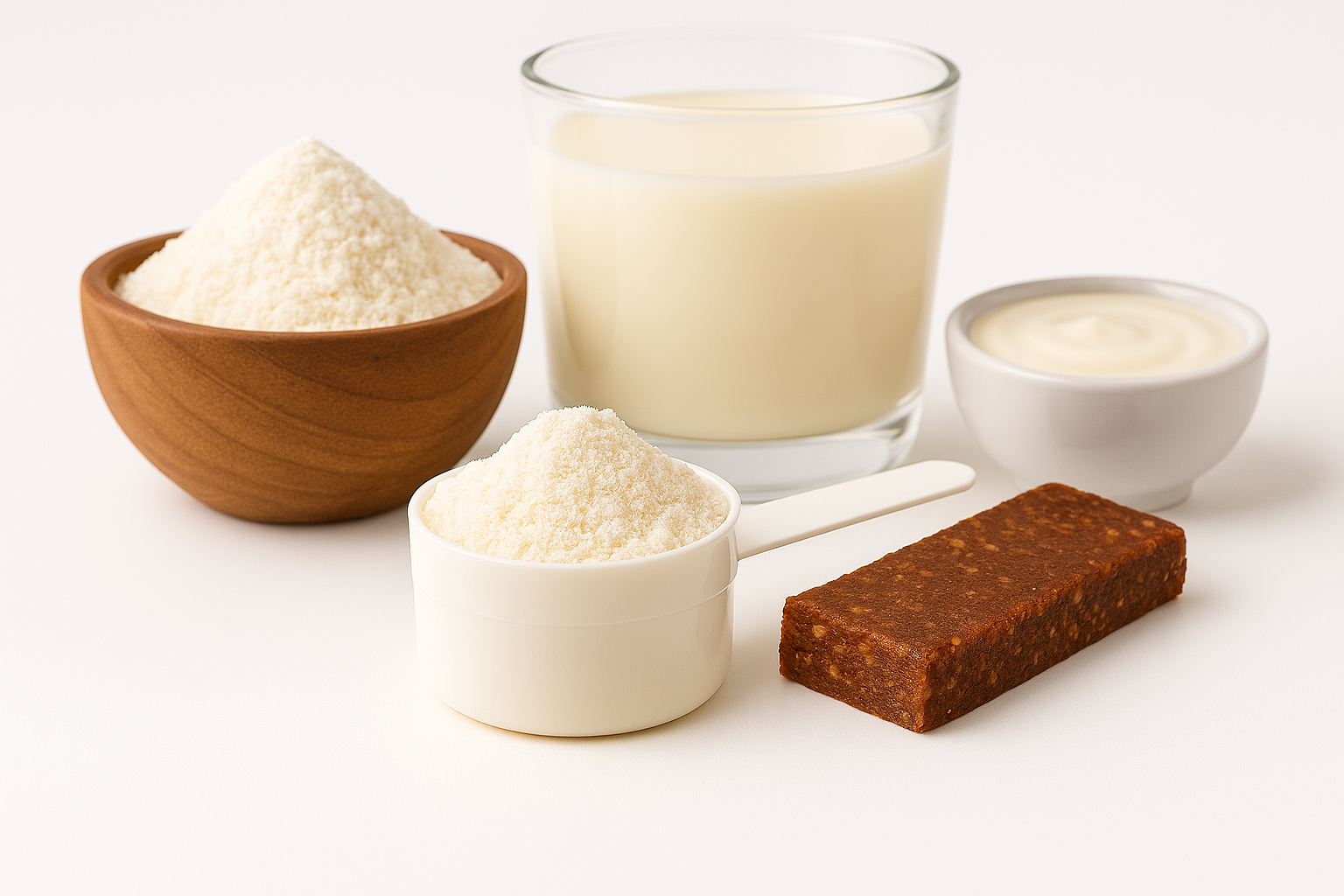
Visually and sensorially, WPC 80 is a fine powder, white to light cream in colour, with a mild milky smell and taste. Behind that simple description stand differences that are crucial for an industrial buyer: processing technology, degree of denaturation, solubility, microbiological quality and whether the product is instantized or not.
WPC 80 is produced from whey, a by-product of cheese or casein manufacture. After whey preparation and clarification, membrane filtration processes are used to concentrate proteins and remove part of the lactose and minerals. The liquid is then spray dried, and if needed further processed to obtain an instantized version that disperses and dissolves faster and more uniformly. A seemingly small technological difference between two producers can lead to a very different behaviour in your production line, which directly impacts quality and stability of the finished product.
Where WPC 80 is used in the food industry
The most common associations for WPC 80 are protein shakes and sports nutrition, but industrial use is much broader.
In protein beverages and sports nutrition, WPC 80 is practically a standard. It is used in powdered blends and RTD drinks when high protein content, fast and clean solubility and acceptable taste are important. Here, the difference between regular and instant WPC 80 becomes very visible. If you source a non-instant type instead of an instant one, you will get lumps, slower dissolution and dissatisfied end consumers. For procurement this means that the RFQ must clearly state which type of product you need.
In protein bars and snacks, WPC 80 affects both declared protein content and texture. In combination with other protein sources (such as caseinates or plant proteins), it helps form a structure that will remain soft enough during shelf life, without excessive hardening. If you change to another WPC 80 type or switch supplier without serious testing, you can easily end up with bars that are much harder than planned after a few weeks in storage.
Dairy products are another major application area. In high-protein yogurts, fermented drinks, dairy desserts or processed cheese, WPC 80 increases protein content and affects viscosity, creamy texture and syneresis. The technologist focuses on how WPC 80 behaves during fermentation and heat treatment, while procurement has to secure batch-to-batch consistency to avoid constant recipe adjustment.
In bakery, WPC 80 is used when you want to produce bread, bakery goods or biscuits with added protein value. Here the balance between cost and benefit is particularly sensitive. The dosage of WPC 80 influences cost per kilogram of final product, but also crumb structure, crust colour and taste. Not every WPC 80 is automatically suitable for bakery – it is important to test and select the one that fits your process conditions.
The confectionery industry uses WPC 80 in cream fillings, spreads, coatings and protein-enriched chocolates. Besides raising protein content, you have to consider its effect on viscosity, stability and mouthfeel. Its interaction with fats, sugars and emulsifiers must be well understood, and close cooperation between technologists and suppliers often prevents problems before they show up in production.
We should also mention instant drinks and nutritional blends: diet products, meal replacements and similar categories. In this area solubility is absolutely critical, because the consumer expects the powder to disperse in water or milk without lumps. On the procurement side, choosing the wrong WPC 80 type in this category almost certainly leads to complaints and additional costs.
What industrial buyers should check in the specification
For B2B procurement, the real question is not whether you buy WPC 80, but whether you buy the right WPC 80 for your specific application – and whether the supplier can deliver it consistently.
First, pay attention to how protein is declared. Is the 80% expressed on a dry basis or on an “as is” basis, and what minimum value does the producer guarantee. Small numerical differences can mean that you do not reach your target protein content in the final product without adjusting the recipe.
Second, clearly distinguish between instant and non-instant types. If you produce consumer-prepared products (shakes, instant drinks, meal replacements), instant WPC 80 is practically mandatory. In closed industrial processes, where you have strong mixing and enough time, it can be economically viable to use a standard WPC 80 – but this should be a conscious decision made together with your technologist.
Third, look at solubility and functional properties, especially if the product undergoes heat treatment, fermentation, or operates in a specific pH range. In some cases reading the spec sheet will not be enough – you need to test a sample under real process conditions.
Microbiology and safety are of course essential. Total plate count, yeasts and moulds, and absence of pathogens (e.g. Salmonella) must comply with your company standards. The speed and clarity of documentation flow is also important: for every delivery you should have a COA, specification and any additional declarations needed (allergens, GMO status, Halal, Kosher).
Finally, consider origin, certifications and traceability. Many companies have internal policies regarding countries of origin, quality system standards and full lot traceability. If you supply retail chains or major brands, such requirements are often not “nice to have”, but a condition for the finished product to be accepted at all.
How to choose WPC 80 type by application
When the decision is not driven solely by the lowest price, choosing WPC 80 is always a combination of technical and commercial criteria.
In sports nutrition and consumer-facing products, solubility, flavour and microbiological safety are critical. In this category, buyers can hardly “forgive” a product that clumps. In dairy applications the focus is on behaviour during fermentation, viscosity and stability over shelf life. In bakery and snack products, the goal is to find a balance between protein fortification, cost and a texture that remains acceptable after several weeks or months. In confectionery and fillings, behaviour in combination with fats and sugars and batch-to-batch consistency are key, so that the recipe does not need constant rebalancing.
In practice, the best results come when the supplier does not stop at sending a price list, but works together with your technologist and procurement to understand the planned application and recommend a product type that makes sense for your process and target segment.
What affects the price of WPC 80 and why the same spec does not mean the same cost
The price of WPC 80 is influenced by more factors than it may seem at first glance. The starting point is the dairy sector: raw milk prices, the balance between cheese and dairy derivative production, and availability of whey for further processing. Then you have origin and logistics: whether it is sourced from within the EU or from more distant markets, container and truck freight costs, customs duties and local charges.
The product type also matters. Instant WPC 80, special functional versions or products from well-known brands occupy a different price level than standard types. Packaging format, pallet configuration and delivery model all influence the final landed cost per tonne – sometimes a product looks cheaper on paper, but once all costs are added, the total picture is different.
Finally, the collaboration model has a strong impact. Pure spot buying, without a plan and without any framework agreement, usually means higher exposure to price swings and higher risk of being short on product at some point. Longer-term arrangements, supported by regional warehousing and volume planning, often lead to a better total cost position, even if the “starting price per kilo” is not the absolute lowest on the market that day.
For professional procurement, the key question is how much WPC 80 costs per kilo of finished product, assuming that supply is stable and does not generate hidden costs through production stoppages or constant reformulation.
How Nutra can support procurement and technology with WPC 80
For industrial buyers in the region, a supplier is not just a source of product, but also a risk filter. A good partner helps you avoid buying just “WPC 80” and instead source the right WPC 80 for your application.
Nutra can support you by helping you choose the appropriate product type for your targeted use: whether it is sports drinks, bars, dairy, bakery or confectionery fillings. Instead of writing only “WPC 80” in your RFQ, you can define clearer technical requirements, and the Nutra team can suggest options that match your process environment and target product price.
Documentation is another important aspect. Specifications, COAs, declarations and related documents must reach your QA and regulatory teams quickly, and often end customers or auditors as well. A structured and predictable documentation flow shortens the time from lab test to commercial application.
Regional logistics and warehousing are a third advantage. Deliveries from regional storage reduce lead times and risk of stock-outs, especially when there is a sudden spike in demand or disruption on the global market. The ability to plan volumes and delivery models (different packing formats, pallet optimization, stock strategies) often allows procurement to balance price, supply security and warehouse capacity better.
Ultimately, cooperation based not only on spot transactions, but on understanding your products, processes and market plans, delivers the most value. At that point WPC 80 is no longer just a line in a spreadsheet; it becomes a managed category.
Conclusion
WPC 80 is a strategically important ingredient for anyone producing protein, dairy, bakery or confectionery products with added nutritional value. Understanding what it really is, where it fits best in your portfolio, and how it impacts cost and supply risk directly affects your margin and production stability.
If you are considering introducing WPC 80 into new products, changing your current supplier or optimising existing formulations, it makes sense to discuss it with a partner who understands both the ingredient and the regional market. With a clear picture of your application and goals, the Nutra team can help you select the right WPC 80 type, define a realistic specification and build a supply model that supports your growth instead of slowing it down.