
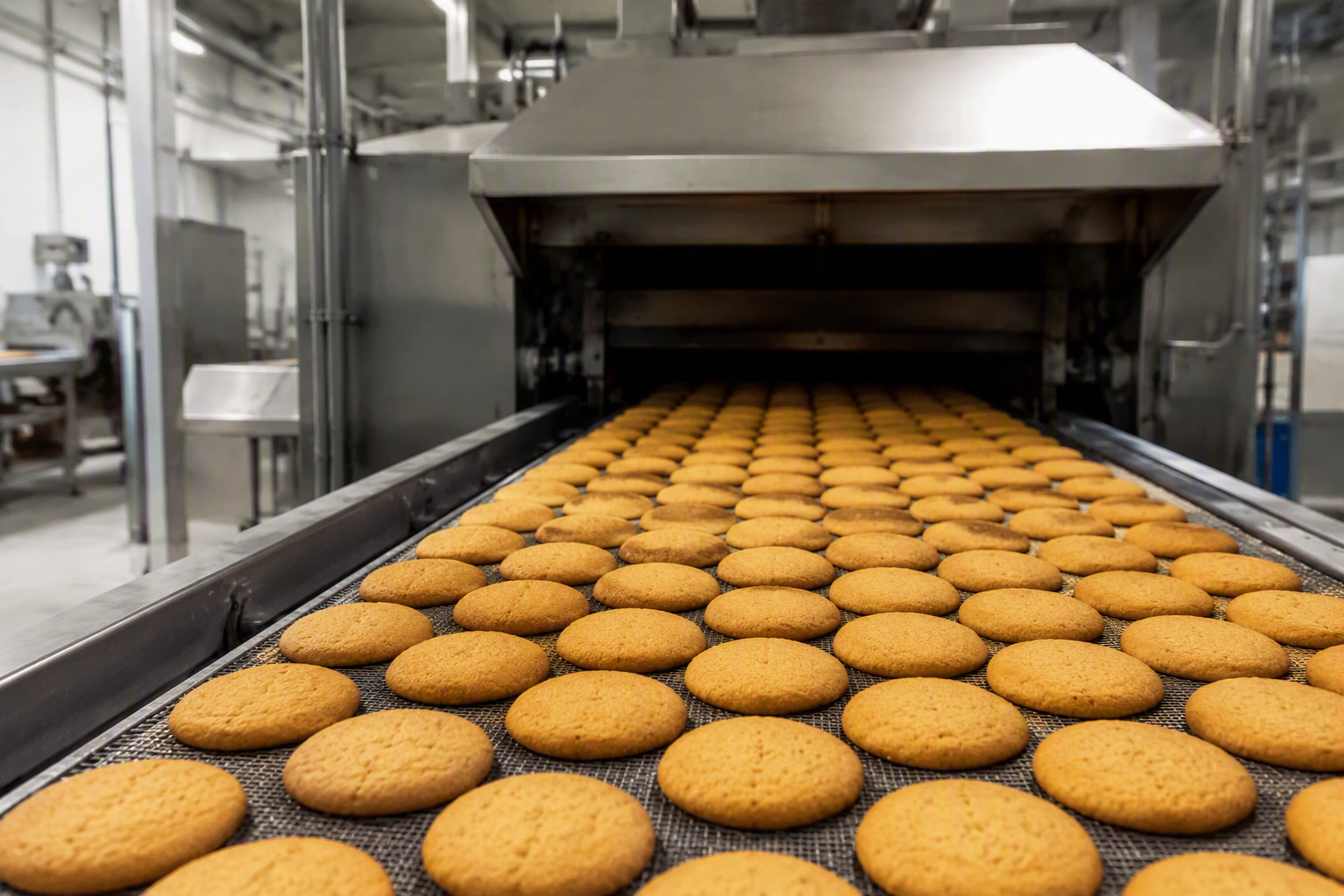
Acrylamide is an unwanted chemical substance that forms during the thermal processing of foods rich in carbohydrates, such as baking and frying at temperatures above 120°C. Its presence in food was discovered in the early 2000s and has since been a focus of regulatory bodies and the food industry worldwide. Among the many strategies for reducing acrylamide, the use of the enzyme asparaginase stands out as one of the most effective and commercially acceptable solutions.
How asparaginase reduces acrylamide
To understand how asparaginase works, we must first understand how acrylamide forms. The key process is the Maillard reaction, a chemical reaction between amino acids and reducing sugars that occurs at elevated temperatures and is responsible for the golden brown colour and characteristic flavour of baked goods. Acrylamide forms when the amino acid L-asparagine, in combination with reducing sugars such as glucose, is exposed to high temperatures during baking or frying. The higher the temperature and the longer the process, the greater the amount of acrylamide formed.
Asparaginase is an enzyme that acts on the root of the problem. Its role is to hydrolyse, or break down, free L-asparagine into aspartic acid and ammonia. Since aspartic acid cannot participate in the Maillard reaction in the same way as asparagine, acrylamide simply cannot be formed. Asparaginase does not remove already formed acrylamide from the finished product. Instead, it removes the raw material that is essential for its formation. This is why the enzyme is added before thermal processing, during dough preparation or raw material treatment, to allow sufficient time for it to act.
Effectiveness in different products
Research conducted during 2025 and 2026 has confirmed the high effectiveness of asparaginase across a wide range of bakery products. Whole wheat biscuits treated with asparaginase showed acrylamide reduction of up to 68%, while crackers achieved reductions of up to 70% with no noticeable changes in colour or taste. In bread production, asparaginase reduced acrylamide in the crust by 39.7% to 42%. Particularly interesting are the results on oat based products, where asparaginase achieved acrylamide reduction of up to 97%.
Modern research shows that asparaginase can be successfully combined with other approaches to achieve a synergistic effect. Studies have investigated the combination of asparaginase with phenolic acids and calcium salts. Individually, calcium salts reduced acrylamide by about 35%, and phenols by 38% to 43%. When combined with asparaginase, the effect is even more pronounced. The addition of rosemary extract, a known antioxidant, has also proven to be a useful supplement to asparaginase treatment, as it not only reduces acrylamide but can also extend the product's shelf life.
Practical application and key factors
For asparaginase to provide optimal results, several factors must be carefully controlled. The effectiveness of asparaginase is dose dependent, with higher enzyme concentrations generally giving greater acrylamide reduction, but there is a point beyond which additional enzyme does not bring proportionally better results. The resting time of the dough after enzyme addition before thermal processing plays a crucial role, as the enzyme needs sufficient time to hydrolyse asparagine before the high baking temperatures deactivate it.
For manufacturers of biscuits, bread, crackers and other bakery products, applying asparaginase involves selecting the right enzyme from the market, optimising process parameters such as dosage, treatment time and temperature, as well as dough resting time, and conducting regular quality control. Conducting pilot tests before introducing the enzyme into regular production is recommended.
Asparaginase represents one of the most effective solutions for controlling acrylamide in the production of biscuits, bread and crackers. Research from 2025 and 2026 confirms that asparaginase can reduce acrylamide from 40% to as much as 97%, depending on the product type and applied conditions. The combination of asparaginase with other approaches, such as the addition of phenolic acids, calcium salts or rosemary extract, opens up additional possibilities for improving effectiveness. For manufacturers who want to meet regulatory requirements and consumer expectations, enzymatic control of acrylamide is no longer an option, but a standard of modern production.