
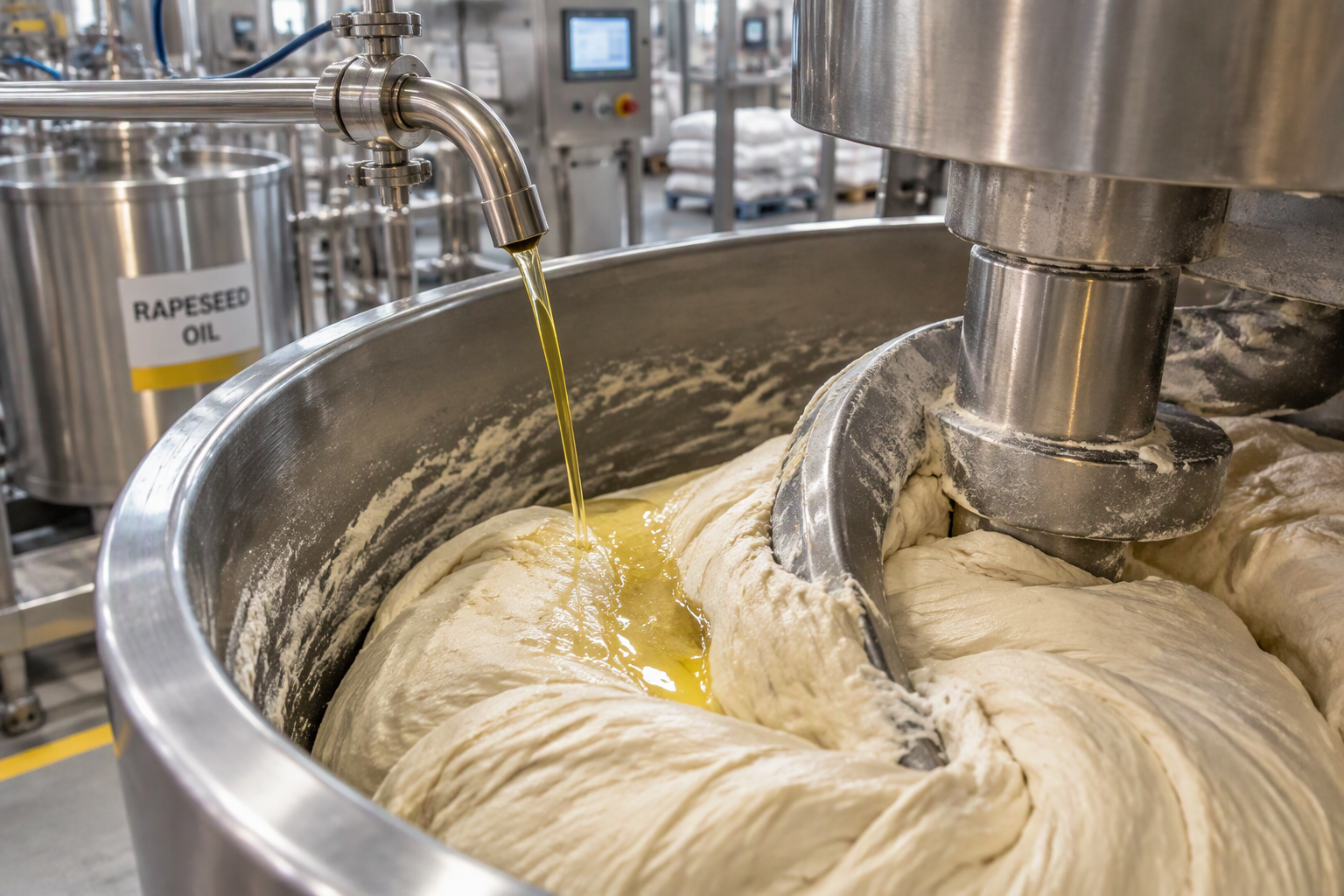
When bakers talk about extending freshness, the focus is usually on hydrocolloids, enzymes, or emulsifiers. Rarely is the fat itself singled out as the key factor. Yet the fatty acid composition of the oil that goes into the dough directly determines how long a product will retain its softness and pleasant taste. In recent years, rapeseed oil has increasingly positioned itself as the solution that offers the best balance between stability, texture, and cost.
Why the High-Oleic Variety
What sets rapeseed oil apart from sunflower or soybean oil is its fatty acid profile. While sunflower oil is rich in polyunsaturated fatty acids that are highly prone to oxidation, high-oleic rapeseed varieties have a dominant share of monounsaturated oleic acid, often exceeding 60 percent. This monounsaturated structure makes the oil more resistant to oxidative changes during baking and storage. Studies on cookies made with high-oleic rapeseed oil showed that it maintained oxidative stability and restricted starch crystallinity growth to just 12.48 percent, while sunflower oil led to a much greater increase, accompanied by a rise in product hardness.
Less Oxidation, Less Hardness
Fat oxidation is not just about rancid taste. When polyunsaturated fatty acids oxidize, they produce secondary compounds that damage the protein-starch network in the dough. This accelerates starch retrogradation, the process primarily responsible for the firming of bakery products during storage. High-oleic rapeseed oil, with its lower susceptibility to oxidation, slows this chain and directly contributes to longer retention of softness. In practice, this means a product can stay on the shelf longer without the consumer noticing a difference from a fresh product.
Practical Application in the Facility
Switching to rapeseed oil does not require radical changes in equipment. Its application is most effective in liquid form, either as a standalone fat or in combination with enzyme systems. There are already dough aids on the market based on rapeseed oil that make dosing easier for manufacturers and ensure even distribution through the dough. Such solutions simultaneously improve crumb softness, extend freshness, and shorten mixing time because the oil is easier to incorporate than powder alternatives. For bakers who want to avoid hydrogenated fats and maintain a clean label, this is a path that requires no compromise in performance.
What to Expect in the Market
Rapeseed oil prices follow movements on the global oilseed market. In the second quarter of 2026, a slight month-on-month increase of 2.18 percent was recorded, and yield estimates for the season are around 3.22 tonnes per hectare, only marginally below last year's record. This means supply will remain relatively stable, but the price will depend on the energy complex and oil market movements, which remain the main driver of all vegetable oil prices. For bakers planning procurement, rapeseed oil remains a more predictable option than those whose supply depends on conditions in tropical regions.