
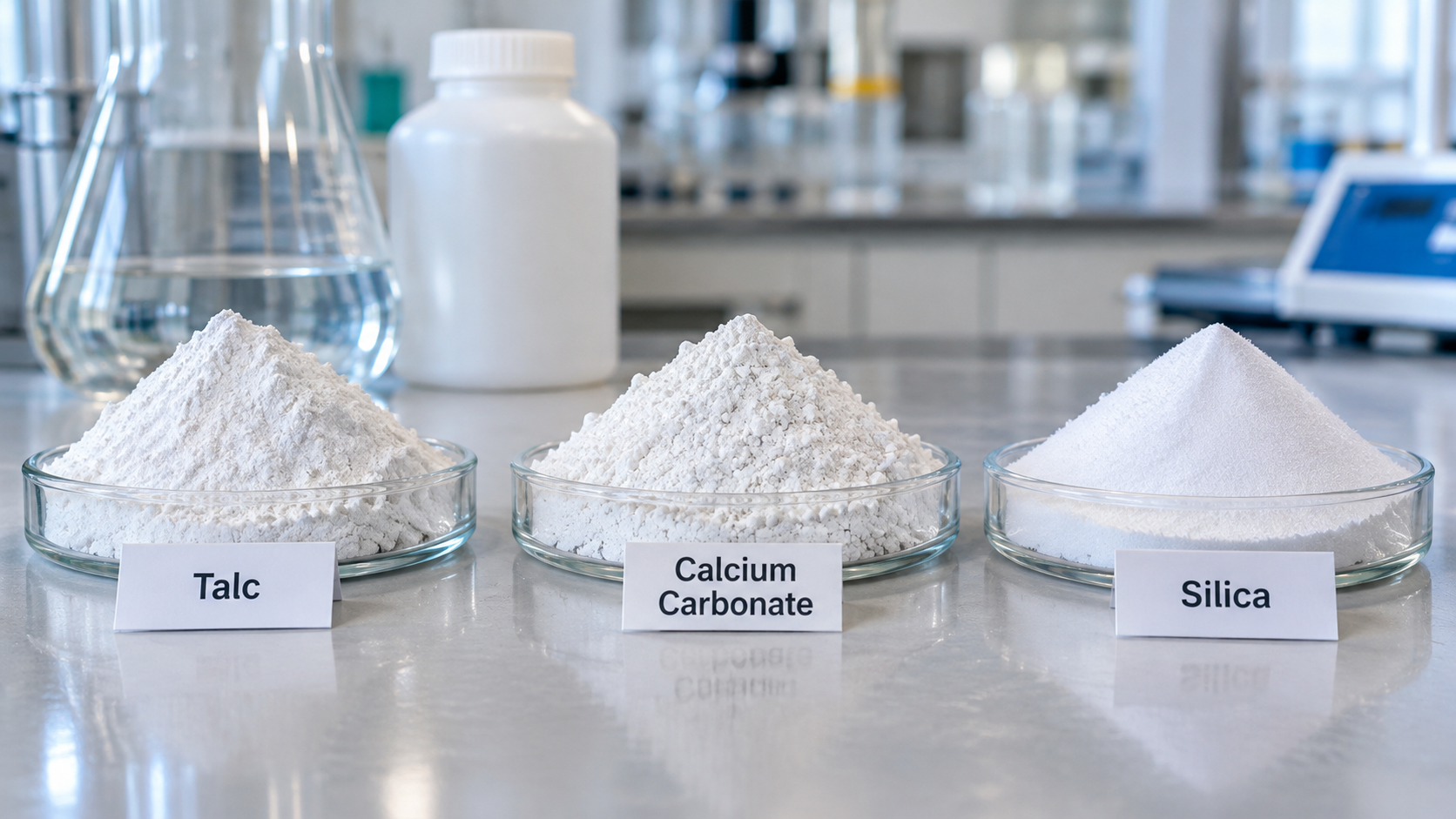
In the coatings, plastics, and rubber industries, few decisions have such far-reaching consequences as the choice of mineral filler. At first glance, talc, calcium carbonate, and silica appear to be interchangeable raw materials used to reduce formulation costs. However, their physical and chemical differences directly determine equipment wear, color stability, mechanical strength, and the final appearance of the product. Understanding these differences is not a matter of preference but of precise engineering.
Hardness as a Total Cost Factor
The most important difference between these three fillers lies in their hardness, as it directly affects wear on processing equipment. Talc is the softest on the Mohs scale, with a hardness between 2 and 4, making it the least abrasive filler in the plastics industry. Calcium carbonate has a hardness between 2.5 and 3, while silica is extremely hard, with a value between 6.5 and 7. In practice, talc is three to four times softer than calcium carbonate and as much as six times softer than silica. For facilities with continuous extrusion or mixing processes, choosing talc can significantly reduce maintenance costs and extend the service life of screws, dies, and mills.
Color Stability and Resistance to External Factors
When it comes to coatings exposed to outdoor conditions, talc and silica show a clear advantage in color retention. Studies have shown that coatings containing these fillers maintain color stability after prolonged exposure to UV radiation because they prevent pigment degradation. In contrast, calcium carbonate does not provide this type of protection, so coatings based on it can undergo significant color changes. Additionally, talc is chemically inert and stable at high temperatures, while calcium carbonate can react in acidic environments, making it less suitable for certain exterior applications.
Rheological Control and Functionality in Formulation
Silica stands out for its ability to modify rheology. In coatings, it acts as a matting and thickening agent, forming a three-dimensional network that prevents pigment settling and improves film stability. Talc, with its platy structure, also contributes to rheology but in a different way, improving processability and reducing shrinkage in plastics. Calcium carbonate is the least functional in this regard, as it primarily serves as an economical filler to increase stiffness and reduce costs.
Safety and Regulatory Requirements
Talc carries a specific risk that the other two fillers do not have. Due to geological proximity to asbestos, raw talc can be contaminated with asbestos fibers, which are classified as carcinogenic. Therefore, for food, pharmaceutical, and cosmetic applications, strict analyses such as polarized light microscopy and transmission electron microscopy are necessary to confirm the absence of asbestos. Calcium carbonate and silica do not carry this risk, but they are also subject to heavy metal and microbiological purity controls, especially in applications that come into contact with food.
How to Choose the Right Filler
The choice depends on the priorities in a given formulation. If the goal is to reduce equipment wear and improve processability, talc is the safest choice. If gloss control, matting, and anti-settling are required, silica is indispensable. When the primary goal is cost reduction with satisfactory stiffness, calcium carbonate remains the most economical option. In practice, hybrid blends are often used, as a combination of talc and silica can simultaneously address wear and rheology, while a blend of talc and calcium carbonate balances cost and performance.