
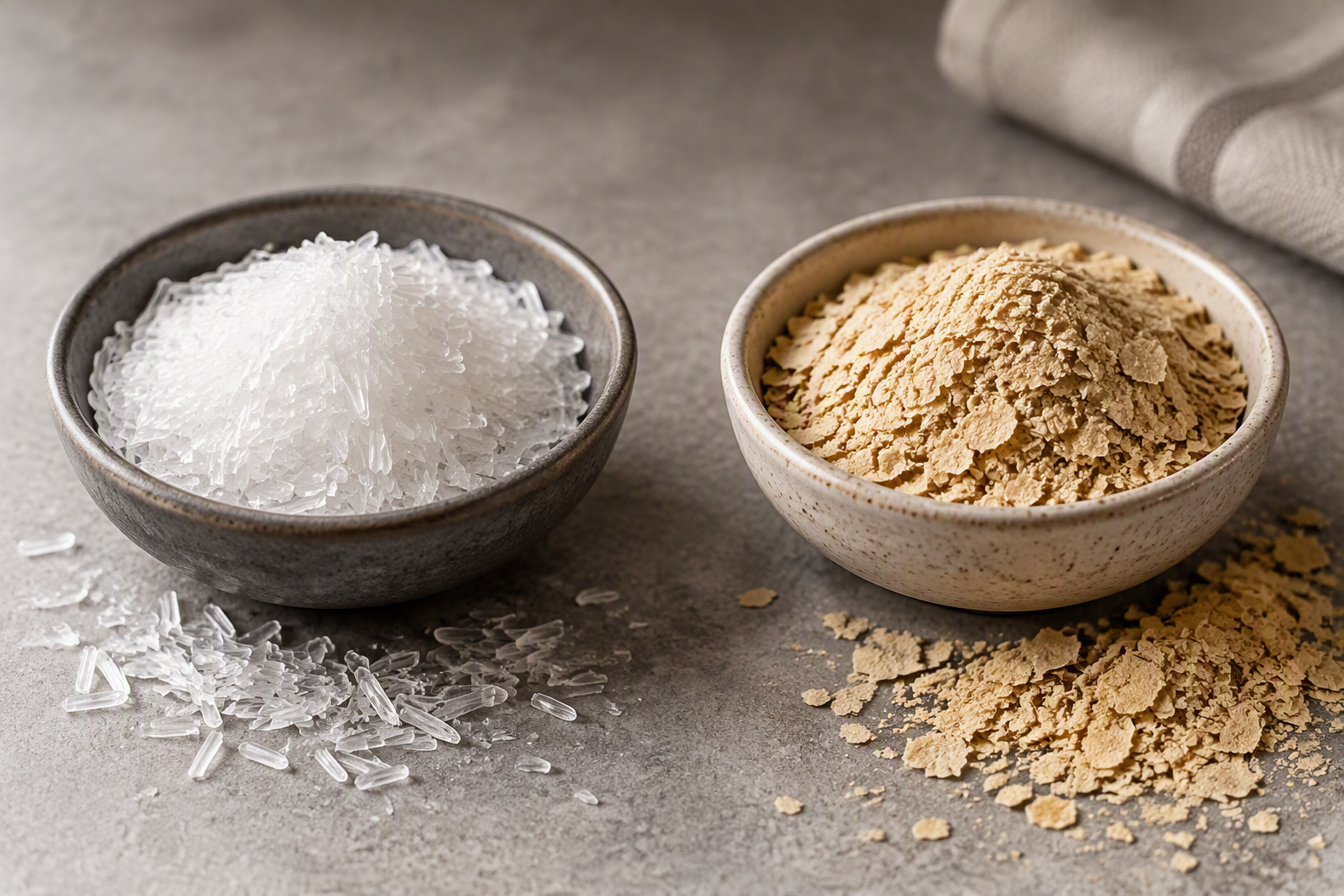
When technologists and procurement managers discuss flavour enhancers, the debate almost always comes down to the dilemma between monosodium glutamate and yeast extract. At first glance, they seem like two completely different raw materials. MSG is the famous additive with the E621 label, while yeast extract is a natural ingredient listed as food on the label. However, from a chemical standpoint, both ingredients do the same thing. They provide glutamic acid that feeds the umami receptors and gives that full, meaty, and rounded taste to food. The difference lies in how these ingredients are packaged and how much they cost.
To make the right business decision, you need to consider several factors that go far beyond a simple price per kilogram comparison.
Flavour Chemistry and Profile Differences
MSG is the isolated salt of glutamic acid. When added to food, it instantly and directly activates umami receptors, providing a clean and highly intense effect. Its action is fast, predictable, and easy to dose.
Yeast extract is more complex. It contains not only natural glutamate but also nucleotides, peptides, and amino acids. Because of this complexity, yeast extract provides not just umami, but also depth, fullness, and subtle roasted or cooked notes. In soups, ready meals, and meat products, it can deliver a richer sensory profile than pure MSG. However, to achieve the same level of umami effect as with MSG, yeast extract must be used in a significantly higher dose.
Cost in Use
This is the aspect that directly affects margins. MSG is extremely concentrated, often more than 99 percent active substance. Yeast extract contains between 15 and 25 percent natural glutamate, depending on the type and production process.
When you calculate the cost of achieving the same intensity of umami taste, MSG is far more cost-effective. In practice, this means you get a significantly stronger effect for the same budget with MSG. Although yeast extract may appear on paper as the more expensive option, it justifies its price only if your primary goal is a clean label rather than cost optimisation.
Clean Label and Consumer Perception
This is the most important point of the commercial dilemma. MSG carries the burden of its history. Although scientific research has long debunked the myths about its harmfulness, consumers remain sensitive to its presence on the label. On the other hand, yeast extract sounds natural and acceptable, making it ideal for products targeting the clean label shelf.
Therefore, the question of cost-effectiveness arises. Is it worth paying a higher price for yeast extract just to avoid the letter E on the label? If you position your brand as premium and natural, the answer is probably yes. If you are fighting a battle in a price-sensitive market, MSG is the logical choice.
The Hybrid Approach as the Best Solution
The most successful manufacturers rarely choose one extreme or the other. Instead, they combine both ingredients. A small amount of MSG provides a strong and cheap umami punch, while the addition of yeast extract adds depth, complexity, and enables a clean label story. This way, the recipe cost is optimised, and the consumer gets a product with full flavour.
When making your decision, do not look only at the price per kilogram. Calculate the actual cost per dose, consider the sensory profile you want to achieve, and think about the market segment you are addressing.