
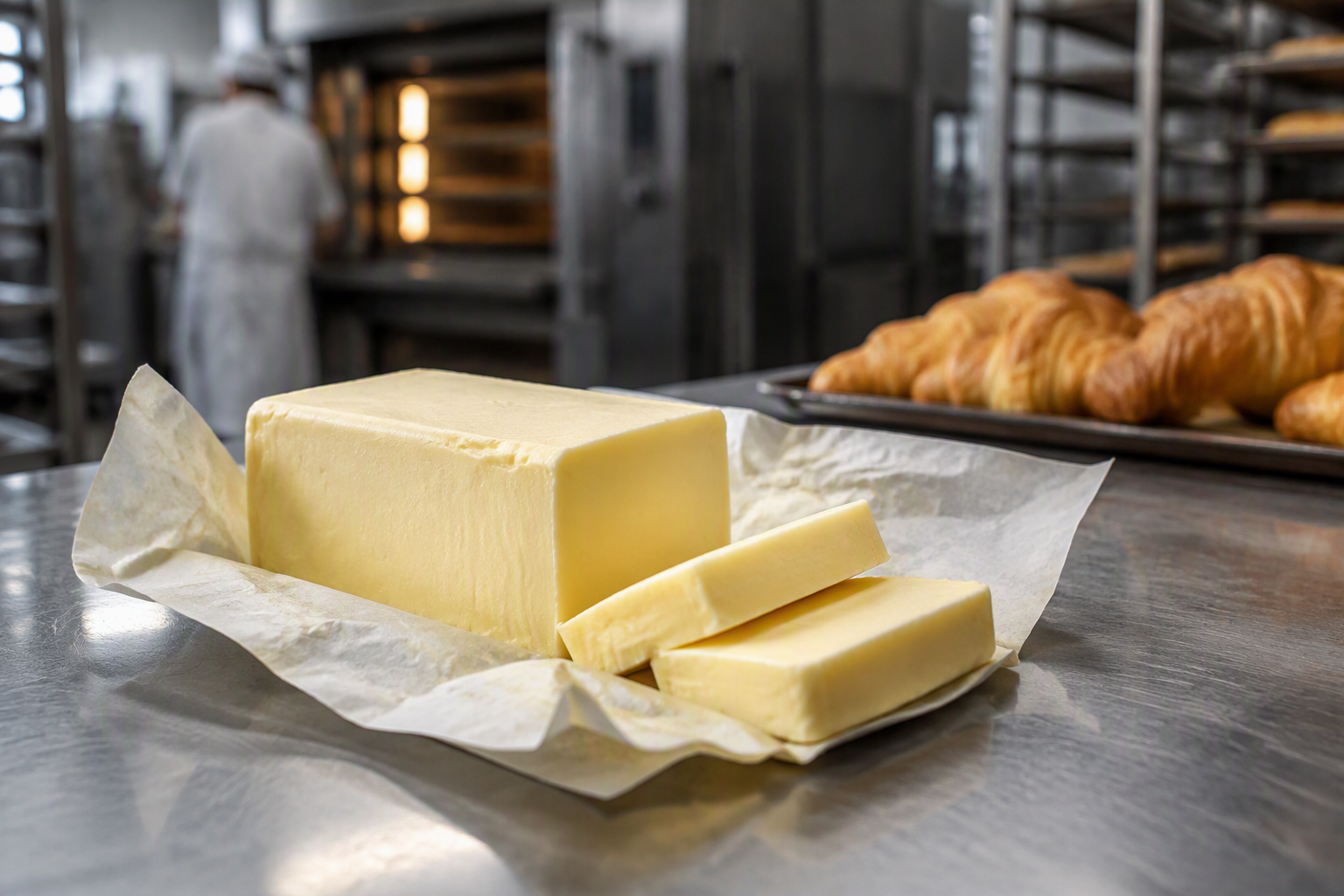
In the world of baking, few ingredients evoke as much emotion and at the same time pose as many technological challenges as butter. For consumers, it is a symbol of quality, naturalness, and traditional taste. For technologists in production, it is a precise instrument that can elevate a product to a higher level or completely ruin it if not handled properly. Understanding this dual nature of butter is crucial for anyone developing bakery products.
Why Butter Is Indispensable in Bakery
Butter is not just a source of fat. It is a functional component that determines the structure, texture, and taste of the final product. When butter is properly incorporated into dough, it creates films around gluten strands, making the dough softer and more pliable. In biscuits, butter prevents the formation of overly long gluten chains, resulting in a crispy rather than hard texture. In cakes, it provides a softness and moisture that cannot be achieved with vegetable fats in the same way.
What makes butter special in baking is its role in aeration. During the mixing process, butter crystals trap air, which later, during baking, allows the dough to rise and develop a fine, porous structure. Without this ability to trap air, cakes would be heavy and dense.
How Consumers Perceive Butter Compared to Alternatives
Although technologists know that margarine or vegetable fats can, in certain processes, provide better workability or even better flakiness, consumers do not see it the same way. On the label, the word "butter" has an almost magical effect. It signals natural origin, the absence of artificial additives, and a higher level of quality. Products containing butter are often perceived as premium, even when they are functionally identical to those with vegetable fats.
This gap between perception and technology creates interesting dynamics in the market. Manufacturers often opt for a combination of butter and special fats to achieve the desired texture while retaining a clean label declaration that appeals to consumers. In some cases, even a small amount of butter in the recipe can be enough to highlight its presence on the label, while the rest of the structure is achieved by other means.
Technological Challenges That Are Often Overlooked
From a technological standpoint, butter is extremely sensitive to temperature. Its melting point is close to human body temperature, which is excellent for mouthfeel but can be a problem in production. If the butter is too cold during mixing, it will not incorporate properly into the dough and may leave lumps. If it is too warm, it will lose its ability to trap air, and the dough will become greasy and heavy.
Another often-overlooked aspect is seasonal variability. Butter produced in winter has a different fatty acid profile than that produced in summer, which can affect plasticity and melting point. Experienced bakers know this and adjust recipes depending on the time of year, but in industrial conditions, this requires careful monitoring and adjustment of process parameters.