
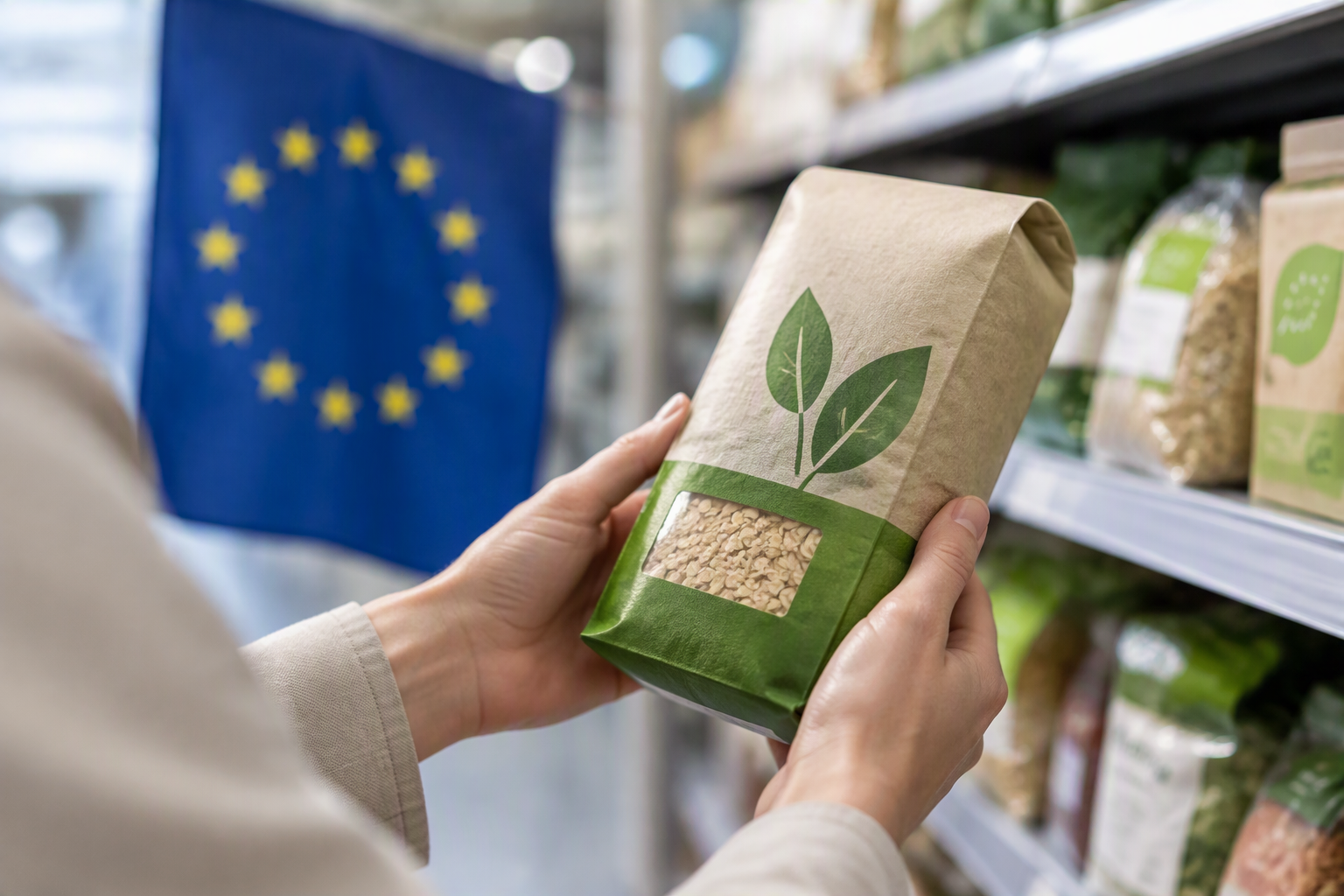
As of 27 September 2026, Directive (EU) 2024/825, known as the Empowering Consumers for the Green Transition Directive (EmpCo), is in force. This directive changes the rules of the game for everyone placing products on the EU market, including food, and represents the most serious blow to “greenwashing” to date.
What Exactly Is Changing?
The essence is simple: every environmental claim must be substantiated. What was until recently allowed as “green” marketing is now subject to strict control.
Under the new rules, generic claims such as “eco”, “green” or “environmentally friendly” can no longer stand alone on packaging without clear explanation and evidence. Producers will no longer be able to self-certify that their products are “vegan”, “eco-friendly” or “climate-friendly” without third-party certification or concrete, verifiable evidence.
The sustainable packaging and labelling segment is particularly affected. Sustainability labels that are not based on an independent certification system or established by public authorities will be banned. Companies will no longer be able to use their own, internal “green” logos without external verification.
What Does This Mean for Food Manufacturers?
For food manufacturers in the EU and those exporting to that market, these are concrete obligations that take effect immediately, with no transition period for stock.
First, it is necessary to review all environmental claims on packaging and in marketing. Every claim about reduced carbon footprint, recycled material or sustainable origin must be supported by verified data.
Second, claims about future environmental goals, such as “we will be carbon neutral by 2030”, must be accompanied by a concrete plan, monitoring mechanisms and independent verification.
Third, claims based solely on offsetting, such as “by buying this product you neutralise your carbon footprint”, are prohibited.
The Problem with Existing Stock
One of the most contentious issues is what to do with products already on shelves whose packaging contains claims that no longer comply with the new rules. The European Commission has clarified that the directive also applies to existing stock, which could lead to product recalls or destruction. There are indications that regulators might take into account efforts companies made before the entry into force, but without guarantees.
What to Expect Next?
The EmpCo Directive is only the first step. The European Commission has also announced a proposal for a Green Claims Directive, which would introduce mandatory ex-ante verification of every environmental claim before it reaches the market. Although that proposal has not yet been adopted, the direction is clear: Europe takes “greenwashing” seriously and will not tolerate unsubstantiated environmental messages.
For manufacturers, the message is clear. The time of superficial “green” marketing is over. Those who invest in real, measurable and verified environmental performance will have an advantage, while those who remain at the level of slogans will risk fines, product recalls and loss of consumer trust.