
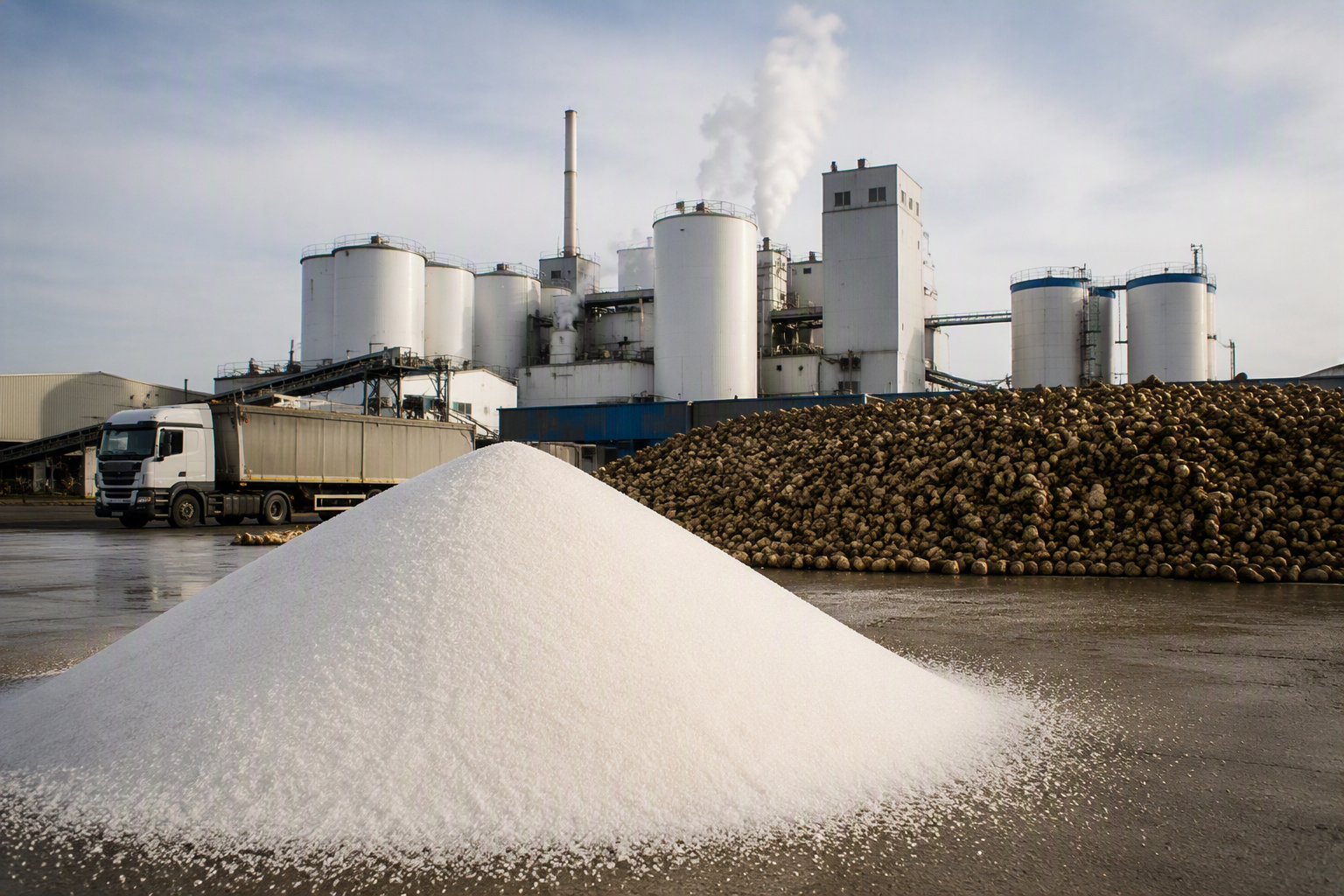
The European sugar market is facing a situation not seen in nearly four decades. French sugar producer Tereos, one of the largest in Europe, announced in late August that sugar production in the European Union for the 2026/27 season could fall to its lowest level since the 1988/89 season. This is not just another announcement about a poor harvest, but a signal that the European sugar market is at a serious turning point.
Causes of the Drastic Decline
The reasons for such a dramatic drop in production are numerous, but climatic conditions have played a key role. The 2026 season was extremely unfavorable for sugar beet cultivation. After a favorable start until mid-June, crops were hit by prolonged drought, a lack of rainfall in key beet-growing regions, and repeated heatwaves. These factors seriously damaged crop development.
The first samples collected by Tereos on August 17 show that sugar beet yields from their growers are more than 20 percent lower compared to the previous season. Compared to the average of the last five seasons, the decline is 15 percent. In some affected areas, yield losses could reach as high as 50 to 60 percent.
These weather conditions did not only affect France. Tereos warns that production problems are affecting several countries and regions across Europe. Forecasts for sugar production in the 2026/27 season are at their lowest level since 1988/89. Estimates from the European Commission are even more precise, pointing to a production decline to around 14.1 million tonnes, representing a reduction of as much as 15 percent compared to the previous season.
How Reduced Production Is Changing Market Dynamics
Such a sharp drop in production will have direct consequences for the entire European sugar market. Tereos emphasizes that reduced production will lead to tensions in sugar availability. At the same time, sugar prices are already beginning to rise due to tighter supply.
Tereos is adapting to the new situation in several ways. The company plans to delay the start of operations at its eight sugar factories to allow optimal time for beet harvesting and to improve yields. It will also adjust the duration of the campaign depending on the production areas. Campaigns are expected to last an average of 100 days, compared to 130 days last year. Some factories will operate at reduced production capacity to adapt to beet quality and process available quantities. This reduction in production capacity will have a direct impact on the quantities available on the market.
What is particularly concerning is that this problem is not just a one-year phenomenon. Tereos warns that this trend could continue in subsequent campaigns due to the continuous decline in sugar beet acreage in France and Europe over the past three years, as well as limited resources available to farmers to adapt to climate change. The decline in sugar beet acreage over the past three years points to a structural problem that goes beyond current weather events.
USDA forecasts indicate that the European Union could become a net importer of sugar, a significant reversal for a market that has been self-sufficient for years. At the same time, the global sugar market faces additional risks, as the El Niño climate phenomenon threatens sugarcane yields in major Asian producers such as India and Thailand. These combined factors could shift the global sugar balance from surplus to a potential deficit.
Consequences for Food Producers and Procurement Strategies
For all food manufacturers who use sugar as a raw material, this situation brings several key challenges. First, sugar prices are expected to rise due to reduced supply. Second, the availability of sugar on the European market could become limited, which may affect production plans. Third, greater dependence on sugar imports from third countries could bring additional uncertainty regarding prices and delivery times.
Manufacturers who rely on European sugar will face greater competition for limited quantities. Those who are able to adapt their formulations and use alternative sweeteners could reduce the pressure on their costs. Also, manufacturers who have the flexibility to choose between different suppliers and regions could secure more favorable procurement terms.