
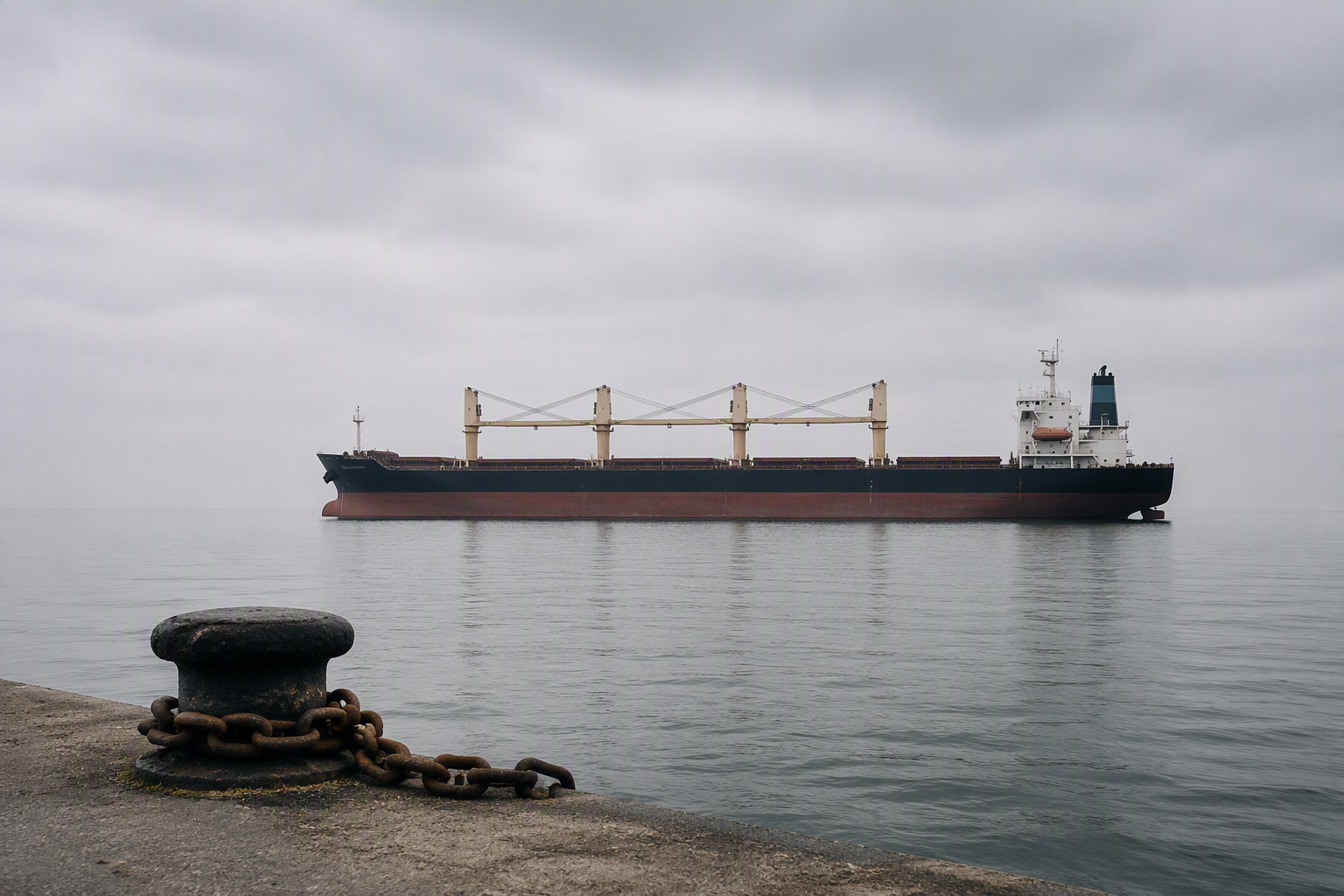
What just a few weeks ago seemed like a serious but temporary disruption in Black Sea grain exports has now escalated into a complete collapse. Attacks on commercial vessels and ports in the Black and Azov Seas have practically halted grain exports from a region that accounts for a quarter of global wheat trade. Prices on world exchanges reacted immediately, but what is particularly concerning is that this crisis is unfolding at a time when global grain stocks are already not at a comfortable level.
Ships Hit, Ports Shut Down
Attacks have become a daily occurrence. In the past week alone, five cargo ships were hit near the Russian Black Sea ports of Novorossiysk and Tuapse. Ship owners are increasingly avoiding Russian ports, which has led to a complete halt of exports from Russian Azov Sea ports since July. These ports previously accounted for roughly a quarter of Russia's grain exports.
On the night of August 12, Ukrainian forces carried out a massive attack on Novorossiysk, targeting the Russian naval base and port infrastructure. The strike hit warships and forced three major grain terminals to suspend operations. These three terminals account for about 75 percent of Russia's Black Sea grain capacity. Ukrainian Black Sea terminals effectively ceased operations at the end of July.
As one Russian seller describes the situation: "I don't see a market in Novorossiysk, nothing is happening there." Another adds: "Ship owners are asking for 70 dollars per tonne for freight to Egypt, which limits business. I would rather not trade."
Russian wheat exports in August are estimated at just 1.8 million tonnes. This is the lowest level for the month of August since 2010, when Russia imposed an export ban due to severe drought. Last year, in the same month, Russia exported 4.5 million tonnes of wheat. Ukrainian exports fell by 75 percent compared to last year in the first two weeks of August.
The market reacted immediately. Wheat prices on the Chicago Board of Trade rose 6.4 percent on Wednesday, August 26, and the following day reached 761.5 dollars per bushel, the highest level since July 2023. In August alone, wheat prices have risen by about 19 percent. Since the beginning of the year, prices have risen by about 35 percent, and since the end of June, the increase has been about 30 percent.
As analysts point out, although grain supplies in the region remain healthy, they are literally trapped. They cannot leave the ports. Alternatives such as exports via the Danube or by rail simply cannot compensate for the capacity of the lost Black Sea ports. Ukraine is currently exporting grain by rail and through Danube ports, but this covers only a fraction of its former volumes. About 70 ships are currently waiting on the Sulina Danube canal.
How This Affects Food Manufacturers
Russia and Ukraine together account for more than a quarter of global wheat exports. Last season, they jointly exported an average of 7.2 million tonnes of grain per month from terminals in the Azov-Black Sea basin. The Black Sea port blockade does not only drive up the price of wheat itself, but this price increase will spill over into all products that depend on it – flour, pasta, bread, and also animal feed, which will affect meat, egg and dairy prices. Global wheat prices are now about 30 percent higher than a year ago.
To support exporters, the Russian government is considering suspending the floating export duty on wheat, barley and corn until the end of 2026. However, even with this measure, the key problem remains the inability to export, not its cost.
Analysts are mostly pessimistic. Ukraine's agriculture minister has stated that they expect to be able to reach 50 percent of their export potential if the ports remain blocked. Russia can redirect part of its exports through Baltic ports, but longer transport distances create logistical challenges and increase costs.
An additional problem is that this crisis is occurring at a time when other factors have already driven up food prices. Heatwaves in Europe have reduced yields, the Middle East conflict has raised energy and fertilizer prices, and El Niño continues to threaten crops worldwide. As one economist warns, the global agricultural system is facing multiple shocks and its reserves are being rapidly depleted.
For food manufacturers, this is the time to reassess their procurement strategy. Wheat and other grain prices are likely to continue rising until the Black Sea port issue is resolved.