
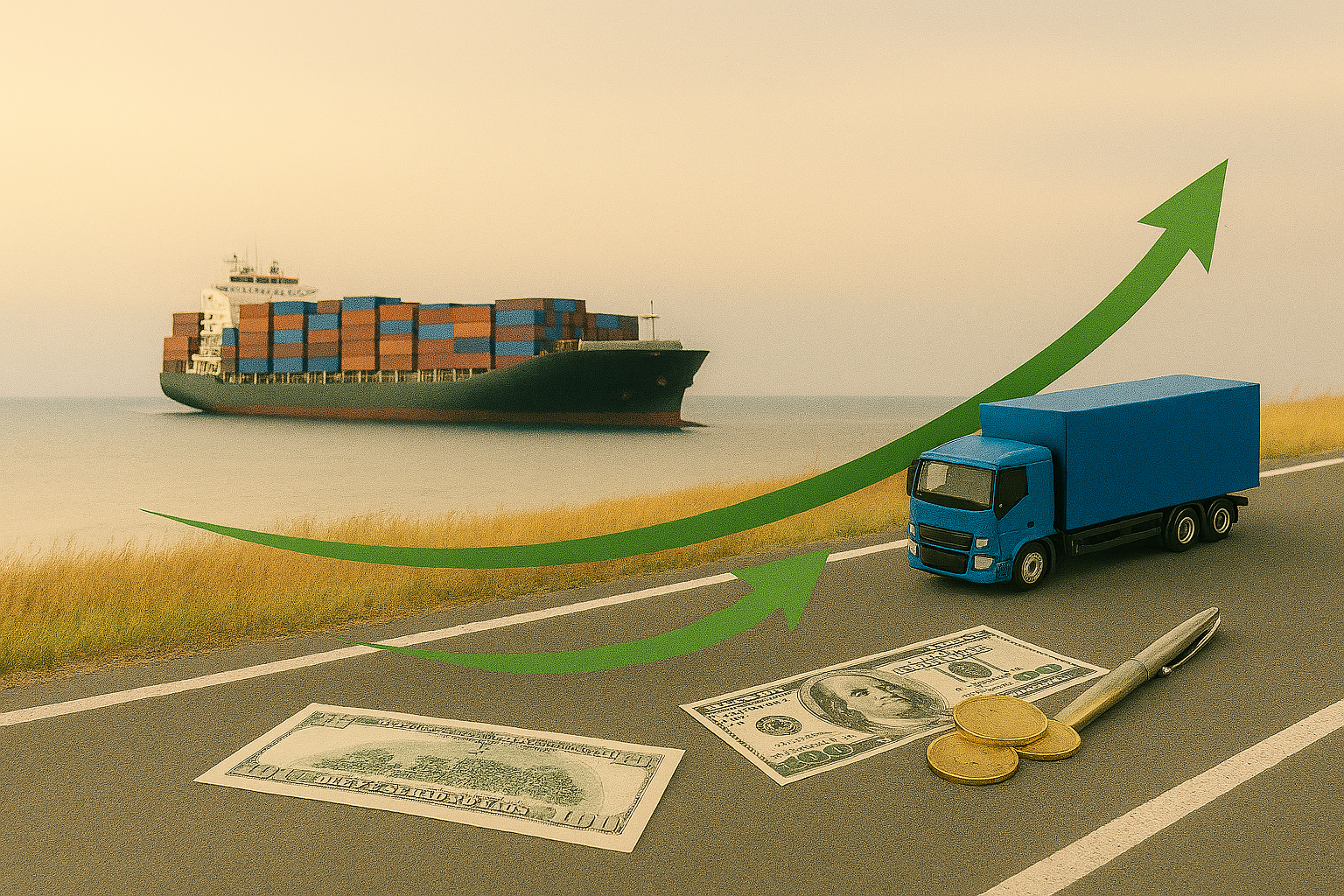
In May 2026, the food industry in the SEE region is operating under the shadow of a new wave of geopolitical tensions. The escalation of conflict involving the US and Israel on one side and Iran on the other, along with a series of indirect tensions across the wider Middle East, directly affects key maritime routes, notably through the Persian Gulf, the Strait of Hormuz and the Red Sea. The result is surging ocean freight rates, longer transit times, higher insurance premiums and an elevated risk of supply chain disruption.
For the SEE food industry, already used to volatility after the pandemic, energy crises and previous disruptions in the Suez Canal, this new 2025–2026 geopolitical reality means that logistics and transport have definitively become strategic issues. The impact can be felt from the procurement of cocoa mass, hydrocolloids and proteins, through to the price calculation of biscuits, meat products, dairy and beverages on retail shelves across the region.
Geopolitical context
The current conflict involving the US and Israel versus Iran is not just a local security problem. Due to Iran’s geographic position and influence in the Persian Gulf, any rise in tensions directly affects the safety of navigation through the Strait of Hormuz – one of the world’s most critical chokepoints for oil, petroleum products and chemicals.
In addition, indirect tensions in the Red Sea and Eastern Mediterranean mean that some shipping lines, especially those carrying high‑value or sensitive cargo, avoid certain routes or apply war‑risk premiums. This leads to situations where cargo is diverted to longer routes, or where larger volumes are pushed through a limited number of “safer” ports, causing congestion and freight rate spikes.
Although the SEE region is not a war zone, it is logistically dependent on the stability of these routes. Raw materials and ingredients for the food industry imported from Asia, the Middle East, and even from West Africa and Latin America (via Suez), are affected: longer transit times, higher freight rates, more expensive insurance and a higher risk of ad hoc disruptions.
Combined effects: transport, energy and risk premiums
The US‑Israel–Iran conflict affects transport costs on several levels at once. First, energy prices rise, as oil and LNG markets react nervously to every piece of news from the Gulf region. Second, additional war‑risk premiums are introduced on ships and cargo transiting through threatened areas. Third, some capacity is withdrawn from high‑risk routes or slowed down, affecting the availability of container slots and tanker space and pushing freight rates higher.
For the food industry, this does not only mean more expensive outbound transport for finished products; it primarily means more expensive inbound transport for raw materials. Ingredients such as hydrocolloids (xanthan gum, guar gum, locust bean gum, pectin, carrageenan, CMC), many emulsifiers, plant proteins (soy, pea), some dairy derivatives and many functional ingredients and additives are often produced in regions whose logistics depend on stable passage through Suez, the Red Sea or the Eastern Mediterranean.
On top of this, the general increase in road transport costs in Europe, due to decarbonisation policies, higher driver wages and infrastructure fees, means that total logistics cost per tonne of raw material in 2026 is noticeably higher than in “neutral” years, even if the underlying commodity price itself is relatively stable.
How geopolitical shocks turn into numbers in raw material costing
In practice, procurement teams in SEE food companies in 2026 face a new reality: supplier offers for raw materials increasingly come with flexible or “open” logistics components. Suppliers quote a base price (EXW or FOB), while transport (CFR/CIF, DAP, DPU) is calculated based on current tariffs and war‑risk premiums at the moment of booking sea or road freight.
This means that, under elevated tensions around Iran, any news of a new incident or blockade can quickly translate into higher transport quotes from particular ports or for certain sea lanes. The share of logistics in the total DAP price of a raw material for a SEE plant can jump by several percentage points in a very short time.
In addition, suppliers often pre‑price risk into their calculations, balancing actual current costs with expected future increases. The effect is that SEE buyers may see an apparently “stable” base product price, but an upward trend in the overall price due to transport surcharges, additional fees or “safety buffer” margins.
SEE as a logistics periphery under growing pressure
Geopolitical tensions in the US‑Israel–Iran context further highlight an existing problem for the SEE region: it sits on the periphery of Europe’s main logistics flows. Many shipments destined for SEE discharge in major ports (Rotterdam, Hamburg, Koper, Piraeus, Constanţa), from where they move on via road and rail.
When part of global flows is diverted due to war‑risk concerns, capacity in those ports and related inland corridors quickly becomes stretched. This leads to longer waiting times, more expensive inland haulage and additional handling costs. For factories in Serbia, Bosnia and Herzegovina, North Macedonia, Bulgaria, Romania or Albania, this means that even when a container has physically arrived in Europe, the “last 500–1000 km” can be more expensive and less predictable than before.
Impact on key food categories in the context of the conflict
In bakery, functional additions such as vital wheat gluten, whey powder, WPC 80, soy and pea protein, as well as enzymes and emulsifiers, are sourced from multiple regions. Those depending on routes through Suez or the Eastern Mediterranean (especially some speciality additives and proteins from Asia) are directly exposed to higher logistics costs due to war risk. Producers of high‑protein and functional bakery products in SEE have to decide whether to raise prices, compress margins or partially reformulate.
In dairy and beverages, some whey protein concentrates (WPC 80), caseinates, soy and pea proteins, sugar replacers and hydrocolloids originate in the EU, but others are part of broader global chains in which the Middle East and Asia are important transit hubs. A war‑risk environment raises logistics costs for these ingredients, particularly if they travel via Suez. This affects the cost of protein drinks, high‑protein yogurts, dairy desserts and non‑alcoholic beverages with functional claims.
In confectionery, the impact is pronounced due to heavy reliance on cocoa powder (natural and alkalised), cocoa butter and cocoa mass sourced from West Africa and Latin America, frequently shipped on routes involving Suez and the Eastern Mediterranean to European ports closest to SEE. Increased logistics and insurance costs are directly embedded in the price of these key ingredients, pushing up the cost base for chocolate, spreads, fillings and coatings.
In meat and savoury, some imported ingredients (phosphate blends for meat, starter cultures, antioxidants, specialised plant proteins for hybrid and plant‑based products, stabilisers for sauces and dressings) may be tied to suppliers whose routes pass through high‑risk areas. This raises costs and increases the risk of delayed deliveries, which is critical for ingredients with shorter shelf life and stricter storage conditions.
Formulations under pressure from geopolitics and logistics
The US‑Israel–Iran conflict does not only affect “numbers” in freight; it also alters the long‑term availability profile of certain supply chains. For this reason, technologists in 2025–2026 are forced to think about formulations that are not only cost‑optimised but also “logistically diversified”.
This means, for example, designing recipes that can use WPC 80 from different regions in combination with sodium caseinate or soy protein concentrate without compromising texture and sensory profile. Or designing thickening and stabilising systems where functions are distributed between xanthan gum, guar gum, locust bean gum, pectin and CMC, leaving room to switch to an ingredient with a more reliable or less risky supply chain when conditions require it.
In practice, this entails additional work on rheology, stability, sensory quality and shelf life, as well as continuous collaboration between R&D, procurement and logistics. Geopolitical risk becomes a factor as relevant as functionality and cost per kilo.
Inventory management under war‑risk and logistics shocks
Ongoing tensions around Iran and the wider Gulf region force SEE companies to balance more carefully between shortage risk and overstock risk. On one hand, the awareness of potential blockades or sudden cost spikes on Suez and Hormuz routes incentivises higher safety stocks for critical imported ingredients. On the other, short shelf life of some functional ingredients, variability of specifications and limited warehouse capacity set natural limits.
As a result, in 2026 more companies adopt a segmented approach: for ingredients with high logistics risk but long shelf life (e.g. certain proteins, sugars, many hydrocolloids), they hold larger stocks, while for more unstable or sensitive ingredients they rely on intensive communication with suppliers and agreement on reserved capacity or alternative routes.
Digital tools for shipment tracking, “what if” scenario simulations (ship delay, temporary lane closure, sharp freight spike) and integrated planning across procurement, production and sales are becoming increasingly important precisely because of geopolitical uncertainty.
ESG, safety and public pressure in times of conflict
At the same time, ESG agendas and transparency demands have not disappeared. On the contrary, war‑related developments in the US‑Israel–Iran context further raise public and regulatory interest in product origin, supply chain security and corporate responsibility in partner selection. The EU and major international buyers are asking suppliers from SEE not only for data on logistics‑related CO₂ emissions, but also for assurance that they use routes and partners compliant with safety standards and sanctions regimes.
For the food industry this means added complexity: the need to reconcile price pressure (logistics more expensive due to war), security of supply (risk of blockade or incidents) and sustainability (lower emissions, responsible route and partner choices). All three dimensions feed into the final cost of raw materials and finished products.
What SEE industry can realistically do under the current conflict
In the current context of the US‑Israel–Iran conflict, SEE food companies can take several concrete steps to mitigate risk and its impact on costs:
They can adapt procurement policies to include suppliers from multiple geographic regions, where feasible, to reduce dependence on a single route passing through high‑risk areas. They can develop flexible recipes with “A” and “B” variants of key ingredients (e.g. combinations of WPC 80, caseinate, soy and pea; combinations of different gums and pectin) that can be activated quickly when logistics conditions change. They can strengthen cooperation with logistics providers and freight forwarders who proactively monitor safety risks along routes and can suggest alternative corridors or multimodal options in case of escalation. They can clearly quantify the share of transport and war‑risk premiums in product costing and communicate this to their customers (retailers, industrial buyers) so that price negotiations are founded on real parameters rather than just the “base” raw material price. And they can invest in systems for scenario planning and real‑time supply chain visibility so that decisions on inventory, production scheduling and recipe changes are taken in time.
In such an environment, the technical team is no longer just the “guardian of the recipe”; it is an active participant in strategic risk management, alongside procurement, logistics and finance.
Conclusion
The conflict involving the US, Israel and Iran, and associated tensions in the Middle East and Red Sea, in 2025–2026 have further underscored how dependent the global food industry is on geopolitics. For the SEE region, logistically peripheral but heavily reliant on seaborne imports and exports through high‑risk areas, global transport costs and war‑risk surcharges have become key drivers of raw material and finished product prices.
In this context, competitiveness depends not only on manufacturing efficiency and brand strength, but also on how well a company understands logistics, monitors geopolitics and builds technological alternatives. Those producers who manage to connect R&D, procurement, logistics and commercial in a single, well‑informed decision‑making system will be far better positioned to absorb war‑ and logistics‑related shocks, maintain supply continuity and remain price‑relevant in the SEE market.