
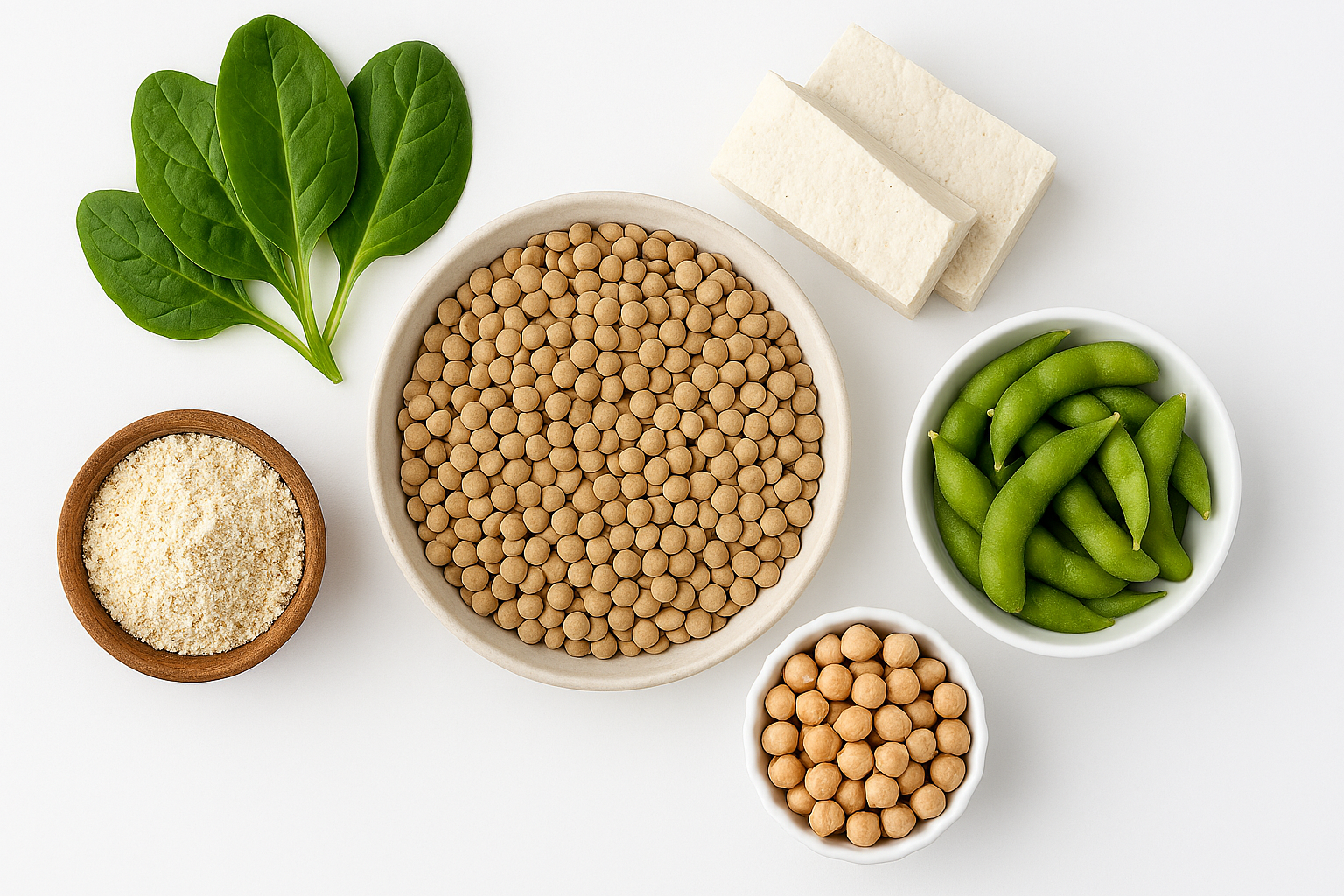
Ten years ago, if someone in the industry mentioned “plant proteins”, most people would have immediately thought of a small vegan niche, specialty stores and products more about image than real volume. Today the picture is very different. Plant proteins have moved into the mainstream of the food industry, and decisions about where and how to use them are no longer just a side topic for enthusiastic R&D teams. They have become a serious question for procurement, commercial, logistics and management.
The main reasons are clear when you look at the numbers. Consumption patterns are shifting, margins are under pressure, and supply risk for traditional animal-based raw materials is increasing. At the same time, retailers and brands are looking for differentiation on the shelf without taking on unmanageable production risk. Plant proteins sit right in the middle of all these forces.
From niche to normal: plant proteins as a standard part of formulations
One of the biggest changes is that plant proteins are no longer reserved for products that carry an explicit vegan or “plant-based” claim. They are quietly entering standard dairy, meat, bakery and ready-meal product lines, often without any dramatic rebranding.
A dairy producer who wants to launch a high-protein dessert does not have to go 100% plant-based. In many cases, the practical solution is a hybrid formula: part of the protein comes from milk, part from plant sources such as pea protein. On the label, the consumer mainly sees “high protein” and a texture that feels familiar. From a manufacturing point of view, the company gains flexibility – less dependence on a single raw material category and more room to optimize cost and risk over time.
Something similar is happening in meat processing. Plant proteins are not used only in meat-free burgers; they are also functional ingredients in traditional meat products, where they help with water binding, texture and yield. The end product is still positioned as a meat item, while the plant protein does its job in the background.
For industrial buyers and R&D teams, this shift means that plant proteins are no longer “optional innovation projects”. They are becoming part of the standard toolbox for managing texture, nutrition, margin and risk across different product lines.
Soy and pea: the two pillars of current demand
In real industrial volumes, two plant protein groups still carry most of the weight: soy proteins and pea proteins. Their roles, however, are not identical.
Soy has been present in the food industry for decades. Production capacity is developed, supply chains are mature, and the functional behavior of soy concentrates, isolates and texturized proteins is well understood, especially in meat, analogs, bakery and some dairy applications. When the priority is a robust functional solution at competitive cost, soy is often still the first candidate.
At the same time, soy comes with a perception burden. Brands that want to build a clean-label or “natural” image are increasingly cautious about soy because of associations with GM crops, allergens and “over-processed” ingredients. This doesn’t mean soy is disappearing, but it does mean that not every marketing team is happy to see it highlighted on the front of the pack.
Pea protein has stepped into that gap as the rising star. It carries a “friendlier” image: no major allergen status, less GMO concern, and a name that sounds familiar and acceptable to consumers. “Pea protein” on the ingredient list often acts as a positive signal, especially in better-for-you and sports nutrition segments.
However, pea protein has its own set of challenges. Many variants bring noticeable beany or earthy notes and can be difficult in delicate applications like neutral-tasting drinks, yogurts and desserts. Technologists spend a lot of effort balancing dosage, flavor masking and processing conditions just to make the product taste “normal”.
For procurement, the key is to understand that soy and pea are not interchangeable commodities. They sit differently in consumer perception, have different functional profiles, and can behave quite differently in pricing and availability cycles.
Beyond soy and pea: broadening the plant protein portfolio
Behind the big two, a broader range of plant protein sources is emerging: fava (broad bean), chickpea, oat, rice and potato proteins are among the most discussed. They rarely replace soy or pea completely in volume, but they are becoming valuable tools for fine-tuning formulations.
Chickpea, for instance, benefits from being a familiar, positively perceived ingredient in many markets. Its flavor profile can be easier to work with than classic soy or pea in some snack and bakery applications. Fava protein is gaining attention in meat alternatives and ready meals because of its potential for good bite and structure. Rice and oat proteins are often combined with pea protein to balance amino acid profiles and reduce off-notes in beverages and bars. Potato proteins can play a strong role as emulsifiers, useful in vegan mayonnaise and sauce systems.
For industrial users, these “newer” plant proteins are less about replacing everything else, and more about solving specific problems: improving flavor, supporting claims, or enabling a particular texture. They can differentiate products in crowded categories, but they also tend to come with shorter supply chains, higher price points and more volatility.
The focus is shifting: from protein percentage to functional performance
Another important but quieter shift is the way the industry evaluates plant proteins. Not long ago, the dominant question was simple: what is the protein percentage, and what is the price per kilo? The higher the number, the better.
Today, especially in more advanced development environments, that is no longer enough. The central questions have become: how does this protein behave in my specific application, under my specific processing conditions, and what does the consumer experience in the final product?
A protein for beverages is judged by solubility, suspension stability, heat stability and behavior under UHT or pasteurization. A protein for vegan mayonnaise is evaluated on its emulsification capacity and stability over shelf life. A protein for a burger or sausage needs to bind water, support structure, survive freezing and thawing, and give the right bite after cooking.
The same declared protein content on the spec sheet can mean very different real-world performance. For procurement, this changes the selection process. You can no longer rely solely on protein %, moisture and microbiology. You need to know which variants are optimized for which applications, and you need close alignment with R&D to avoid choosing a technically unsuitable but cheap option that will later cost weeks of reformulation.
Clean label pressure: simpler declarations, more work in development
While part of the market celebrates every new technical innovation, the broader consumer base is asking for something simpler: ingredient lists they can understand. This trend strongly influences how plant proteins are used and which ones are selected.
Brands prefer ingredients that can be clearly named and explained in one simple sentence: “pea protein”, “chickpea protein”, “oat protein”. Complex, unfamiliar ingredient names or long chains of additives needed to “fix” the taste and texture of a harsh protein are increasingly seen as a liability.
As a result, suppliers are under pressure to deliver plant proteins with more neutral flavor and color, requiring fewer flavorings and texturizing aids. Every step toward a more neutral, clean-tasting protein makes it easier for manufacturers to keep the label short and understandable.
Of course, achieving this often means more sophisticated processing and higher cost. The trade-off between functionality, sensory quality, price and label simplicity is becoming one of the defining challenges in plant protein development.
Regional specifics: what “trend” really means in practice
Global trend summaries often borrow language from Western Europe or North America, where consumer demand for plant-based and high-protein products is already strong and relatively price-insensitive in certain segments. But each region has its own reality.
In Central and Eastern Europe, for example, demand for plant-based and high-protein products is clearly growing, but price sensitivity remains high, especially in private label and mainstream retail. Plant-based drinks, protein desserts and snacks are gaining shelf space, but the willingness of mainstream consumers to pay a large premium is limited.
In many meat plants, plant proteins are used primarily for functional and economic reasons rather than for overt marketing claims. They are there to help with yield, texture and cost, more than to open a new fully plant-based product line.
For manufacturers in these markets, it means that formulas imported from Western Europe or the US often need both sensory and cost adaptation. The trend is real, but the speed and depth of adoption are determined by local purchasing power and expectations.
Supply, volatility and the importance of continuity
The growth in plant protein demand has also put pressure on supply chains. The last few years have shown how quickly capacity in certain categories can become a bottleneck, particularly for popular items like pea protein isolates or specialty plant protein concentrates.
For procurement, switching from animal to plant proteins with the assumption that “supply will just be there” is risky. Questions around continuity of supply, contract lengths, minimum order quantities and lead times are becoming as important as the ingredient spec itself. Many companies are introducing dual sourcing strategies for key plant proteins to avoid dependency on a single supplier or region.
Documentation requirements add another layer. Non-GMO status, allergen statements, halal and kosher certificates, and in some segments organic certification are now standard topics in supplier conversations. Every additional claim narrows the supplier pool and makes it more complex to switch sources later without requalification. That is why many companies now think carefully about standardizing specifications in a way that keeps some flexibility for future supplier changes.
Are plant proteins really cheaper?
Public discourse often suggests that moving to plant-based ingredients is automatically cheaper and more sustainable. Industrial reality is more nuanced. In some market cycles, certain plant protein isolates have actually been more expensive than standard dairy proteins. On top of that, the functional dose needed to achieve the same texture or stability can be higher.
It is also common to add flavors, fibers or additional hydrocolloids to correct texture and taste issues linked to the plant proteins. When you calculate the full recipe cost per kilo of finished product, plus scrap and rework rates, it becomes clear that plant-based is not by definition the low-cost option.
The business case for plant proteins therefore rarely rests solely on ingredient price. It is more about market access (new categories, new claims), portfolio risk management (less dependence on one raw material class) and brand positioning. These are all valid reasons to move in this direction, but they require honest cost modeling rather than assuming automatic savings.
What leading manufacturers are doing now
Companies that handle the plant protein trend well tend not to chase every buzzword. Instead, they do a few things consistently. They define clearly where in their portfolio high-protein and plant-based positioning makes real business sense. They work with their R&D teams to define minimal technical requirements for proteins by application, instead of buying “everything that says protein” on the label. They test multiple sources and variants before concluding that “a protein doesn’t work”. And they invest in relationships with suppliers who can offer more than a price list: application support, realistic advice, transparent documentation and reliable logistics.
The core insight is that plant proteins are not a passing fad, but they are also not a magical one-size-fits-all solution. They have become a serious, permanent part of the industrial ingredient landscape. Used well, they can open new product spaces and reduce some types of risk. Used naively, they can create costly reformulations, unstable supply and disappointed consumers.
For any producer considering more plant proteins in their portfolio, the real value does not come from “finding the cheapest plant protein quickly”, but from setting up the right structure: clear product and market goals, application-specific specifications, and a network of partners who can support trials and ensure stable supply once a formulation is locked in. The trend will continue; the real question is whether it will become a long-term advantage or an expensive detour.