
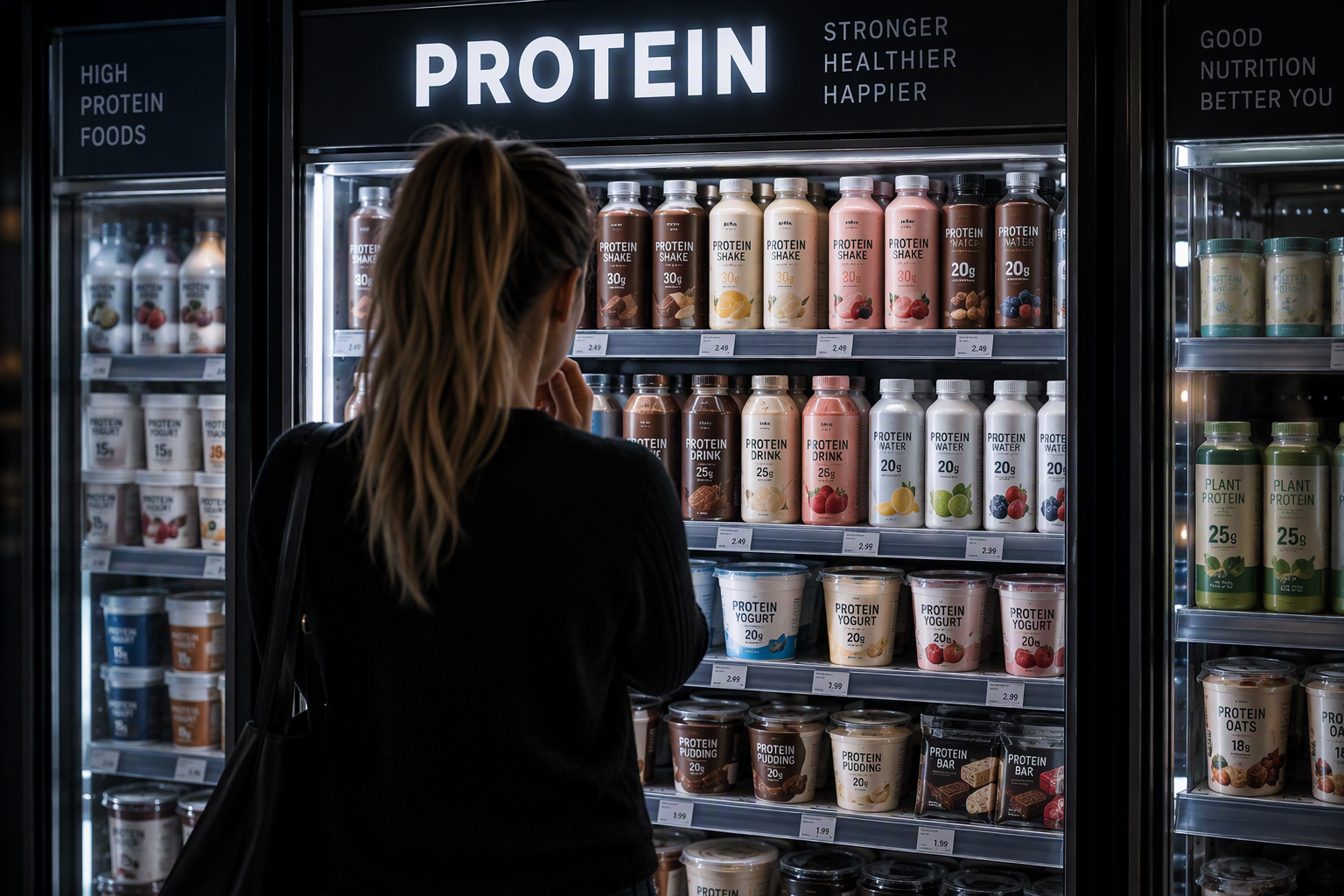
In recent years, the food industry has been in a relentless race for numbers. On the back of the packaging, the figure indicating the amount of protein was the main selling point. If a protein bar had twenty grams and a competitor's had twenty five, the winner was clear. However, a quiet but highly significant shift is happening in the market right now. Consumers have become more educated, and their expectations have outgrown the mere counting of macronutrients. It is no longer enough to just add protein to a product. The key question now is what kind of protein it is, how it behaves in the product, and what it actually does for the body.
This paradigm shift directly affects everyone developing new products. Formulation has become much more complex because the focus has moved from quantity to quality, digestibility, and functionality.
New Consumer Expectations
The modern consumer will no longer be satisfied with a product that simply has a high protein content. They want to know where the protein comes from and what its amino acid profile is. Additionally, the growing number of users of GLP-1 weight loss therapies has changed the rules of the game. These consumers eat smaller portions and therefore demand that every bite be maximized. They need protein that effectively supports the preservation of muscle mass and provides a long-lasting feeling of satiety, but without uncomfortable bloating. In this context, a high protein content without good digestibility becomes completely useless.
The Nightmare of Every Technologist
On the other hand, adding large amounts of protein to a recipe often creates serious technological headaches. Proteins are known for their ability to ruin texture. When you overdo the dose, cakes become dry, beverages sediment, and an unpleasant, sandy sensation develops in the mouth. In addition, some plant proteins often carry specific earthy or beany notes that are difficult to hide without the use of large amounts of artificial masking flavors.
This is exactly where the biggest challenge of today's industry lies. How to ensure that a product is nutritionally rich while maintaining a flawless texture and clean taste?
Why the Quality of the Source Is Crucial
When talking about protein quality, dairy proteins, and especially whey protein concentrate (WPC), remain the gold standard. WPC is not just a source of high quality protein with a complete amino acid profile. Its true value lies in how it behaves in production. It is characterized by excellent solubility, a neutral taste, and the ability to form stable emulsions.
When a manufacturer uses high quality WPC, it is much easier to achieve a smooth texture in protein beverages or a creamy structure in yogurts and desserts. Unlike some cheaper alternatives that require the addition of large amounts of stabilizers and masking flavors, WPC naturally provides a good mouthfeel and easily fits into various recipes.
When Cheap Becomes the Most Expensive
In an attempt to meet high protein goals, many manufacturers reach for the cheapest raw materials on the market. However, the economic calculation often fails there. A cheaper isolate or concentrate may have poorer solubility, leading to production line downtime or a failed batch. Also, its bioavailability may be low, meaning the body will not efficiently utilize it. When everything is added up, the total cost of use is far higher than the savings on the initial price per kilogram. A quality protein, although more expensive on paper, actually saves money in production and delivers a better final product.