
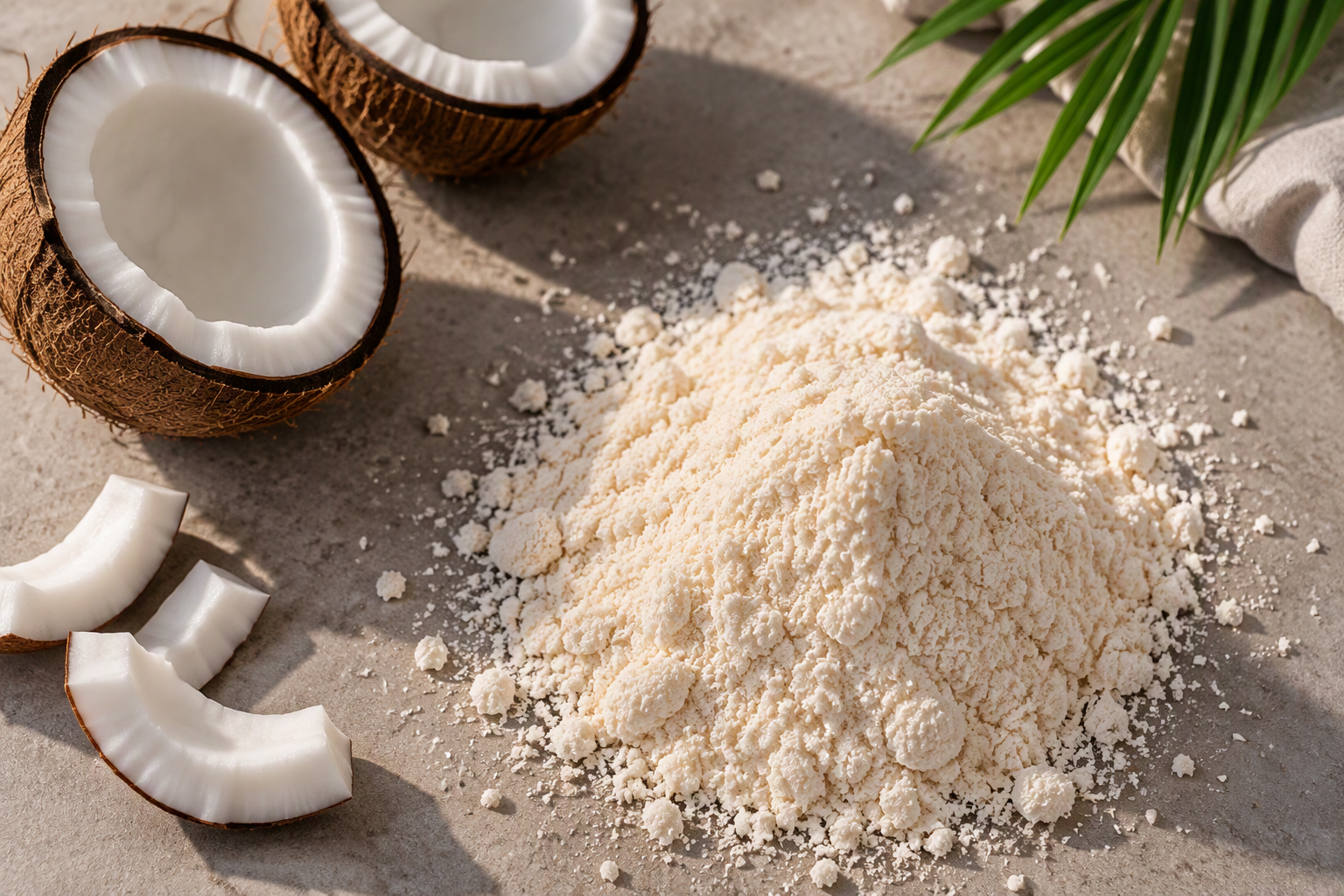
Coconut flour has become an indispensable ingredient in the development of the modern food industry, especially in gluten-free, keto, and low-carb product segments. Its main advantage is the exceptionally high content of dietary fiber, which often exceeds fifty percent of its total mass. However, with this advantage comes a serious technological challenge. This flour absorbs enormous amounts of water, which can lead to a dry and crumbly texture, while its pronounced aroma can easily overpower the other ingredients in the product. Therefore, the key question is how to utilize its nutritional potential while preserving sensory quality.
Why Coconut Flour Absorbs So Much Water
The reason lies in the fiber structure. When coconut flour comes into contact with liquid, its fibers swell and bind water several times their own weight. In practice, this means that recipes with this flour require significantly higher amounts of liquid, eggs, or binders to achieve proper hydration. If this step is skipped, the final product will be extremely dry and prone to falling apart.
Technologists in the industry often resort to combining coconut flour with hydrocolloids such as psyllium, xanthan gum, or guar gum. These ingredients help retain moisture and improve elasticity, mimicking the behavior of gluten. In addition, adding modified starches or whey proteins can further stabilize the texture and prevent crumbling.
How to Mask the Specific Aroma
The second obstacle is the pronounced, somewhat nutty coconut aroma that can be undesirable in products where a neutral taste is expected. The solution lies in smart pairing with other flours and ingredients. Mixing coconut flour with oat, rice, or almond flour achieves a milder profile and better texture, while simultaneously retaining a high fiber content.
In savory products, the coconut aroma is very successfully masked by using spices, yeast extracts, or garlic powder. In sweet products, much better results are achieved by adding cocoa powder, vanilla, cinnamon, or almond essence. Cocoa powder is particularly effective because its deep color and intense flavor completely cover the mild coconut notes, making it an ideal partner in chocolate cakes and protein bars.
Practical Examples in the Industry
In gluten-free bread production, coconut flour is usually used in combination with rice flour and psyllium. Psyllium forms a gel that acts as a glue and retains water, allowing the bread to remain soft even after several days. When used in such blends, the share of coconut flour is usually between fifteen and twenty percent of the total flour mass.
In protein bars and snacks, coconut flour serves as a source of fiber and helps reduce the total carbohydrate content. Here, the coconut aroma is often perceived as an advantage, as it pairs perfectly with chocolate, peanut, or hazelnut flavors. An additional advantage is that it helps bind the mixture, preventing the bar from falling apart under pressure.
Nutra monitors trends in the use of functional ingredients and can help you choose the right type of coconut flour for your application. Our team understands the challenges related to water absorption and provides support in formulation so that your product retains high fiber content with flawless taste. Contact us for advice tailored to your needs.