
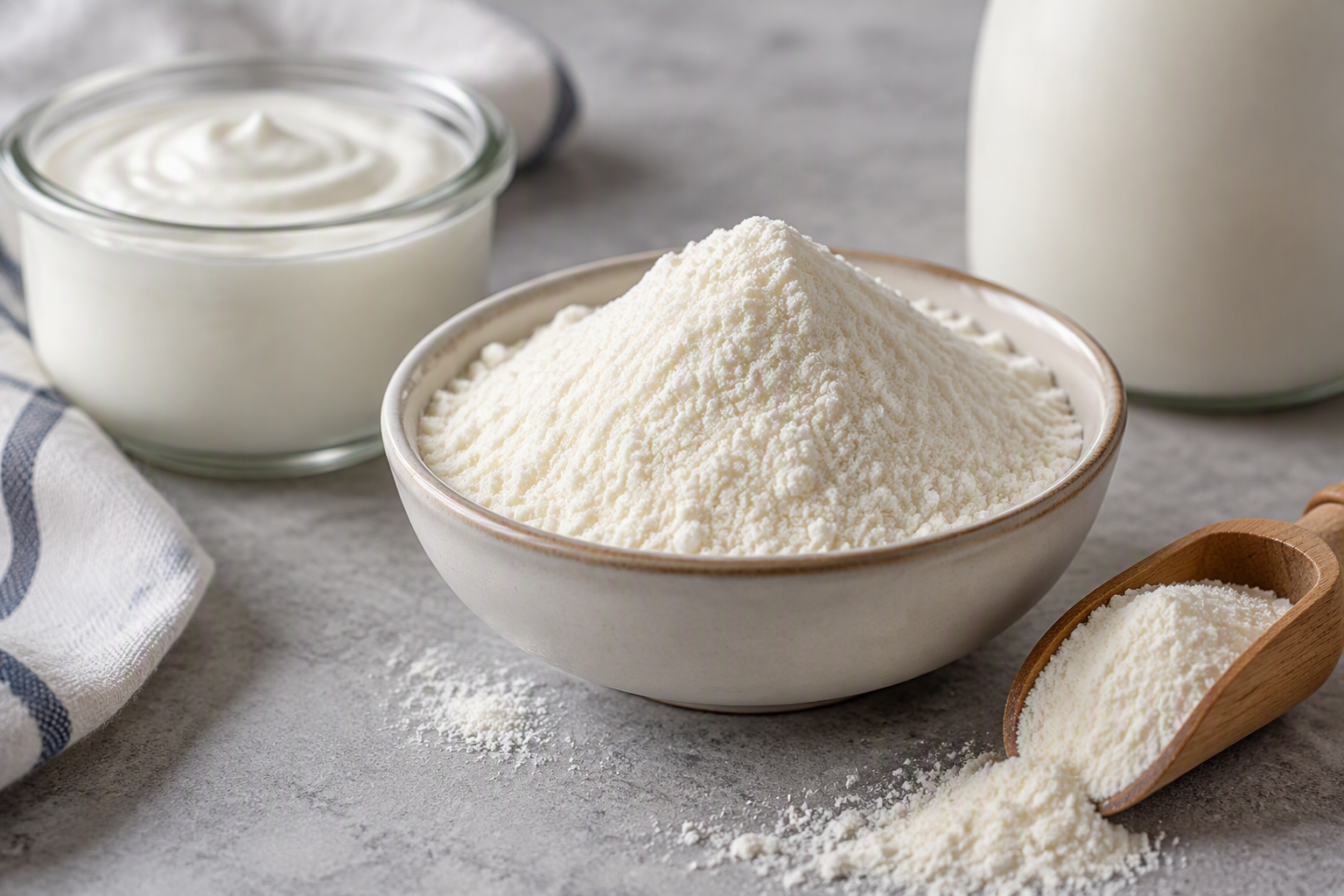
Artificial flavors have been the industry standard for decades when it comes to achieving a recognizable yogurt taste in products that cannot contain fresh fermented dairy. However, the rules of the game are changing. Consumers are reading labels more carefully and increasingly rejecting products with synthetic flavors. In this context, yogurt powder is emerging as a functional solution that simultaneously meets clean label requirements and delivers an authentic sensory experience.
Why Artificial Flavors Are No Longer Enough
An artificial yogurt flavor typically consists of a combination of esters, lactones, and lactic acid. It can provide a strong and recognizable aroma, but it rarely manages to fool the palate. The lack of real dairy solids means the product lacks the fullness, creaminess, and depth of flavor that consumers expect from yogurt. When used in bakery products, confectionery, or snack coatings, artificial flavors often taste flat and synthetic, leaving a bitter or metallic aftertaste.
On the other hand, clean label requirements are becoming stricter. Retailers increasingly reject products with artificial flavors, and consumers are willing to pay more for products containing recognizable and natural ingredients. That is why manufacturers are looking for a way to replace synthetic flavors with an ingredient that sounds acceptable on the label while providing an authentic taste.
What Yogurt Powder Brings to the Formulation
Yogurt powder is a dehydrated fermented dairy product. Unlike artificial flavor, it contains real milk proteins, lactose, lactic acid, and minerals. Thanks to this, it provides not only aroma but also fullness of flavor, mild acidity, and a creamy texture. When added to a product, it behaves as a functional ingredient, not just a flavor.
In bakery products, yogurt powder can improve color and texture because milk proteins and lactose participate in Maillard reactions during baking. In snack coatings, it provides an authentic tangy profile that cannot be achieved with artificial flavor. In instant beverages and breakfast mixes, it dissolves easily and provides a natural yogurt taste without the need for a cold chain.
What to Consider When Substituting
Although yogurt powder is an excellent alternative, its use requires recipe adjustments. First, the dosage needs to be adjusted. Yogurt powder is less intense than artificial flavor, so it should be used in a larger quantity. Second, keep in mind that it also brings milk proteins and lactose, which can affect the texture and color of the product. Third, check stability during thermal processing, as high temperatures can alter its flavor profile.
From a commercial standpoint, the price per kilogram of yogurt powder is higher than that of artificial flavor. However, when considering that it also replaces part of the dairy solids and provides functional benefits, the actual cost per dose may be justified. In addition, a product with a clean label can achieve a higher market price, further justifying the investment.
Conclusion
Switching from artificial flavors to yogurt powder is not just a matter of trend. It is a strategic decision that can improve product quality, meet market demands, and build consumer trust. For manufacturers who want their products to have an authentic yogurt taste and a clean label, yogurt powder is a solution worth considering.