
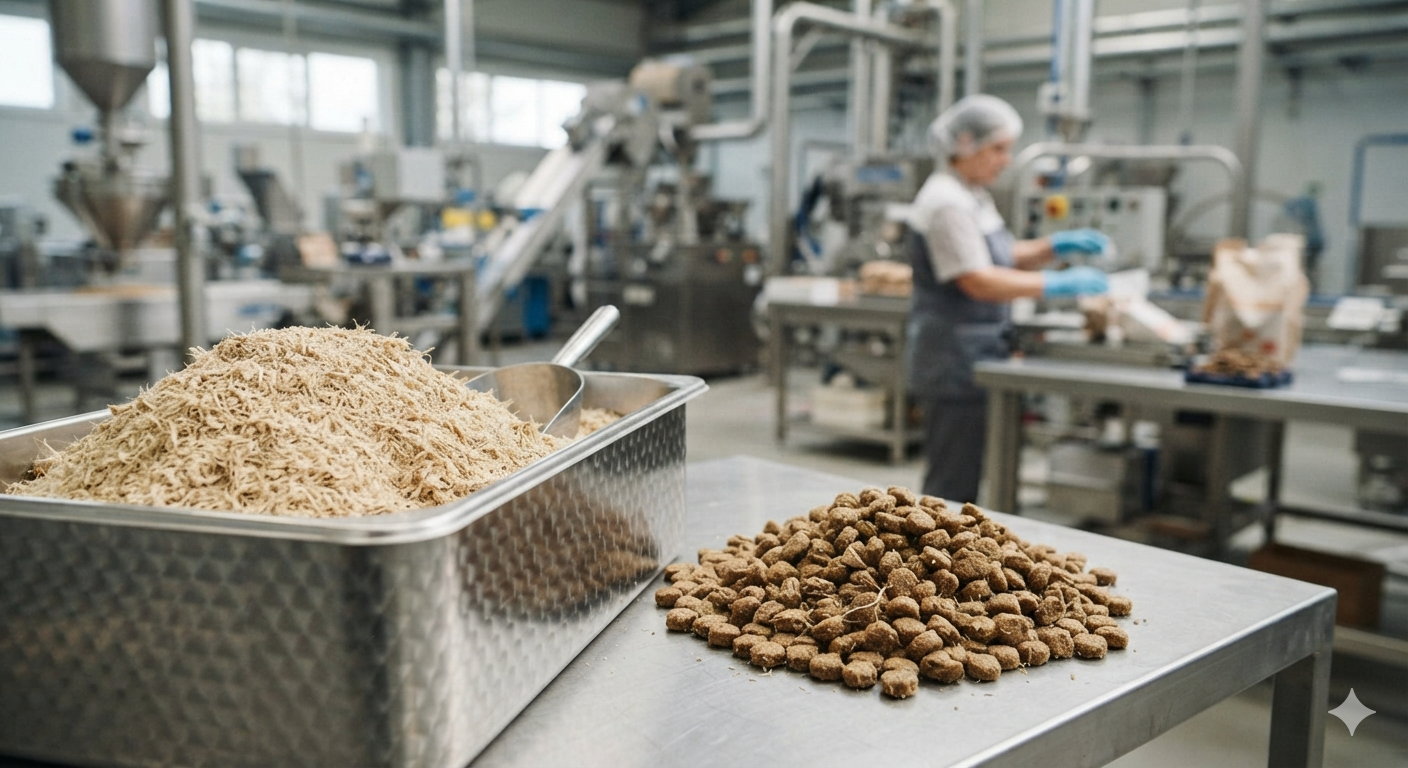
Pea fibre is not a new ingredient, but it is only in recent years that it has received the attention it deserves. As a by-product of pea protein production, it was until recently overshadowed by its more popular cousin. Today, as demand for plant proteins grows, so does the amount of available fibre. And it is proving to have properties that make it exceptionally valuable in animal nutrition.
What Sets It Apart from Other Fibres
What makes pea fibre special is the way it ferments in the gut. While some fibres pass through almost unchanged, and others cause a sudden drop in pH and bloating, pea fibre ferments at a moderate rate. This means it feeds beneficial bacteria without causing stress in the digestive tract. The result is a stable gut environment that helps the animal cope more easily with stressful periods, such as weaning in piglets or the first weeks of life in broilers.
Where It Performs Best
In piglets, pea fibre helps preserve intestinal barrier function during weaning, when the risk of inflammation and diarrhoea is highest. In broilers, including pea hulls up to six percent in the ration results in the highest overall feed intake and the most efficient feed conversion. In dairy cows, peas can replace part of soybean meal and corn grain without negatively affecting milk production.
Why It Is Increasingly Sought After
Three factors coincide. The first is the need for local sources of protein and fibre, as Europe has depended on soybean imports for decades. The second is the EUDR deforestation regulation, which complicates soy imports and encourages alternatives that can be documented. The third is the growth of the plant-based ingredient market, because as pea protein production increases, so does the amount of co-products from which fibre is obtained.
What to Consider
Pea fibre is not a universal solution. Its effect depends on quantity, source, and processing. Too much fibre in the ration of young animals can reduce the digestibility of other nutrients. Therefore, gradual introduction and performance monitoring are important. Also, pea fibre is not a protein replacement. It is a functional additive that improves gut health and ration stability.