
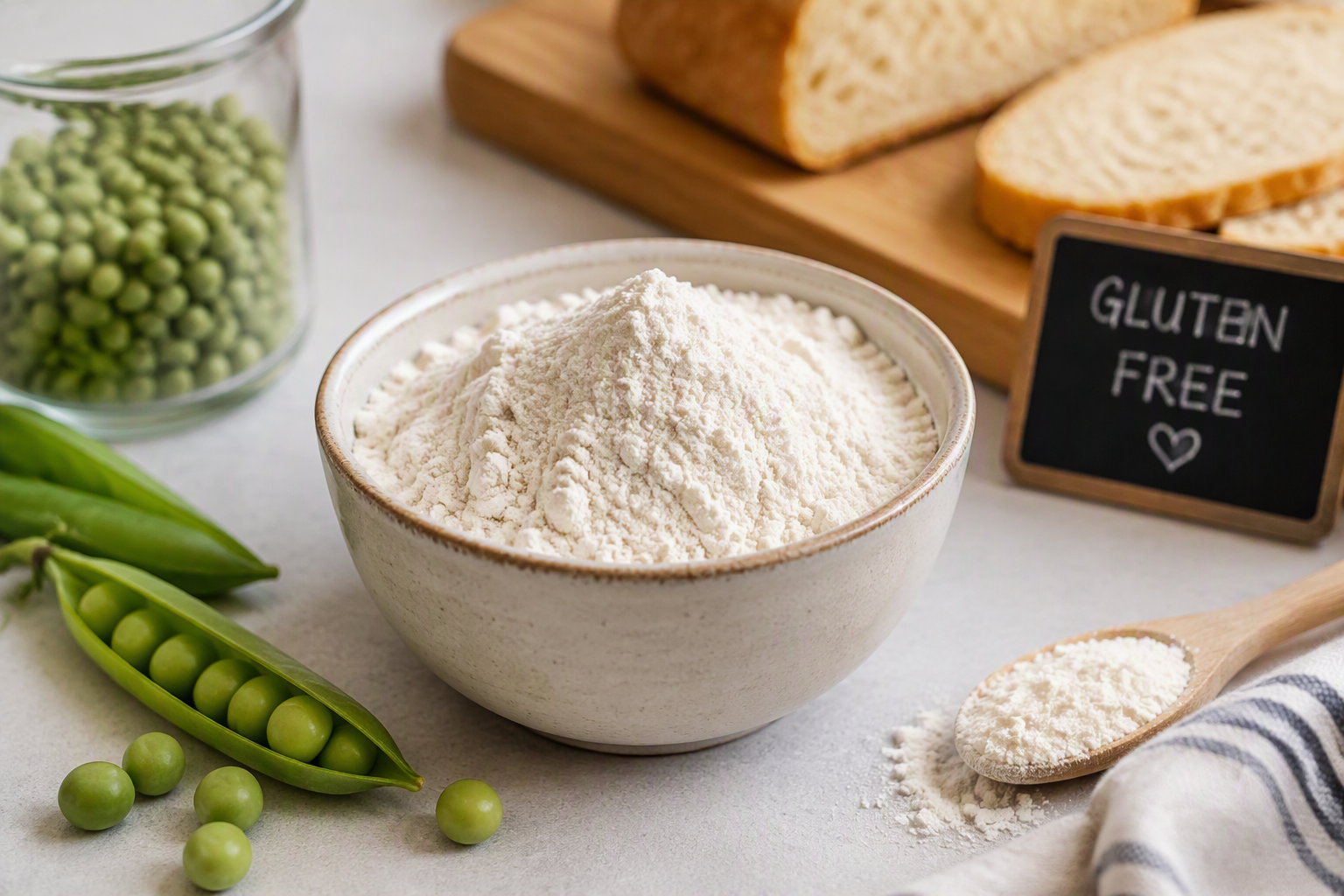
Pea starch is not a new ingredient, but it is only in recent years that it has received the attention it deserves. As a by-product of pea protein production, this starch was for decades overshadowed by its more popular cousin. Today, as demand for plant proteins grows, so does the amount of available pea starch. And it is proving to have properties that make it exceptionally valuable in numerous applications, particularly in gluten-free production.
What Sets Pea Starch Apart?
Pea starch contains between 35 and 65 percent amylose, significantly more than corn starch, which has around 24 percent. This high amylose concentration gives it the ability to form firm gels and provide the structure needed in gluten-free products. That is precisely why pea starch has become one of the key ingredients in gluten-free pasta, bread, and confectionery.
However, high amylose also brings challenges. Pea starch has a pronounced tendency to retrograde, a process in which starch molecules reorganise into a crystalline structure during cooling and storage. Retrogradation leads to increased firmness, reduced elasticity, and deterioration of texture over time. In pasta production, this manifests as brittleness and loss of quality after cooking.
How Are the Limitations Overcome?
Producers and researchers have developed several approaches to control pea starch retrogradation. One of the most effective is modification during production. For example, removing starch-bound lipids extends the time to retrogradation and improves noodle texture. Also, combining heat treatment with controlled cooling can slow down the molecular reorganisation process.
Particularly interesting is the use of pregelatinised pea starch. This form of starch has already undergone gelatinisation and drying, meaning it can function as a thickener without the need for additional heating. This property makes it ideal for products prepared by cold processes or for applications requiring instant viscosity.
Where Has Pea Starch Proven Most Successful?
In gluten-free pasta production, pea starch has shown exceptional results. Thanks to its high amylose content, it forms a network that replaces the function of gluten and gives pasta firmness and cooking resistance. Research shows that combining pregelatinised and dry pea starch can produce pasta that maintains its structure even after prolonged storage.
In the confectionery industry, pea starch is used as a gelling agent in the production of vegan jelly candies. Research has shown that pea starch can successfully replace gelatine and form a gel that is stable and pleasant. This is particularly important as demand for plant-based gelatine alternatives grows.
In the meat industry, pea starch is used as a binder and fat replacer in products such as sausages and burgers. Research shows it reduces cook loss and improves water-holding capacity. In plant-based meat alternatives, pea starch forms emulsion gels that replicate the functional properties of adipose tissue.
In the dairy industry, pea starch is added to yoghurt and analogue cheeses to improve texture and water retention. Research on goat yoghurt showed that pea starch reduces gel porosity and forms larger aggregates, positively affecting firmness and elasticity.
In animal feed production, pea starch is used as an energy source in pig and poultry nutrition. Research shows that pea starch can stimulate amino acid synthesis in the body, making it a valuable ingredient in formulations for young animals.
What to Expect in the Market?
The pea starch market is growing faster than most other starches. It is estimated to reach between 209 and 215 million dollars in 2026, with an annual growth rate of 6.5 to 8.5 percent through the early 2030s. Key drivers are the growth of the gluten-free market, increasing demand for plant-based ingredients, and the need for alternatives to corn starch.
For manufacturers developing gluten-free products or seeking functional alternatives to conventional starches, pea starch offers a combination of performance and sustainability that makes it an increasingly attractive choice. Its ability to form firm gels, replace gluten, and improve texture in numerous applications makes it an ingredient that deserves a place in every modern formulation.