
Citric acid, also known as E330, has been present in the food industry for decades as an acidity regulator and preservative. What is less known to the wider public is that this same acid has become one of the key ingredients in the cleaning industry. At a time when phosphoric acids and phosphates are being phased out due to environmental concerns, citric acid is emerging as a natural, effective and safe alternative.
What Makes Citric Acid Effective in Cleaning?
Citric acid acts in two ways simultaneously. First, it is an acid that dissolves mineral deposits such as limescale, rust and hard water stains. Second, and perhaps more importantly, it is a chelating agent. This means it binds metal ions such as calcium, magnesium and iron, preventing them from re-depositing on surfaces. This dual function makes it extremely effective in removing limescale from kettles, washing machines, dishwashers and coffee machines.
Research has shown that citric acid not only removes deposits, but does so more thoroughly than phosphoric acid. When scientists compared the dissolution of copper oxide, citric acid left the fewest residues on the surface, while phosphoric acid left a persistent layer despite similar acidity. This is a key difference that explains why citric acid is increasingly used in industrial and household cleaning products.
Why Is Phosphoric Acid Losing the Battle?
Phosphoric acid and its derivatives, such as sodium tripolyphosphate, were standard in detergents and cleaning products for years. However, their use carries serious environmental consequences. Phosphates that reach watercourses cause eutrophication, a process in which excessive algae growth occurs. When algae die and decompose, they consume oxygen from the water, leading to fish kills and disruption of the entire aquatic ecosystem.
The European Union has recognised this problem and introduced restrictions on the phosphate content in laundry and dishwasher detergents. As regulatory bodies note, the ban on phosphates in detergents has led to increased use of citric acid in Europe. Citric acid is fully biodegradable and does not accumulate in the environment, making it a far more acceptable option.
Where Is Citric Acid Most Used in the Cleaning Industry?
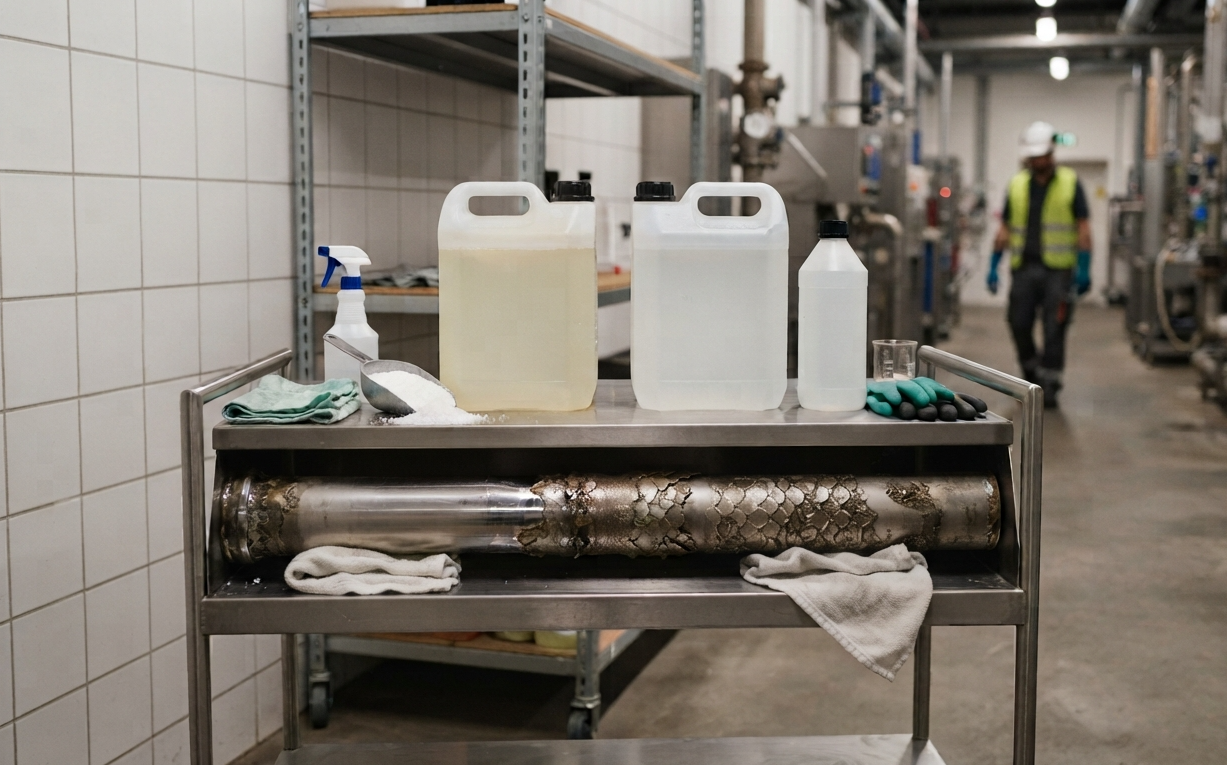
Citric acid has found application in a wide range of products and processes. In industrial cleaning, it is used to remove limescale from equipment in the food industry, such as heat exchangers, evaporators and pipelines. In household chemicals, it is present in descalers, dishwasher and laundry detergents, as well as all-purpose cleaners. In water treatment, it is used to control limescale and metals in boilers and cooling systems.
What makes citric acid particularly attractive is its compatibility with other ingredients. It can be combined with surfactants, enzymes and other organic acids, enabling the formulation of products that simultaneously remove mineral and organic deposits. This makes it ideal for CIP (Cleaning-in-Place) systems in the food industry, where efficient cleaning without equipment corrosion is required.
What to Consider in Formulation?
Although citric acid is effective, there are some challenges in its application. Its corrosiveness towards certain metals, such as aluminium and mild steel, requires careful material selection or the addition of corrosion inhibitors. Also, temperature and contact time play a key role in achieving optimal results. Use at temperatures between 50 and 70 degrees Celsius is recommended, with extended contact time for stubborn deposits.
For cleaning product manufacturers, citric acid offers the opportunity to create products that are simultaneously effective, safe and environmentally friendly. With increasingly strict regulations and growing consumer awareness of environmental impact, citric acid is not just an alternative to phosphoric acids. It is the standard of the new generation of cleaning products.