
The plant-based protein market is no longer just the domain of vegan and vegetarian products. What was a niche category a few years ago is now a mainstream trend shaping the entire food industry. Manufacturers worldwide are increasingly incorporating plant proteins into standard formulations, not only to meet consumer demands but also to optimize costs and respond to supply chain challenges.
However, when we talk about plant proteins, two completely different concepts are often confused: plant proteins as raw materials for increasing protein content and hydrolyzed vegetable proteins as ingredients for improving taste and texture. Although they come from the same sources, their role in formulation is fundamentally different. Understanding this difference can significantly improve product development.
What Are Vegetable Proteins?
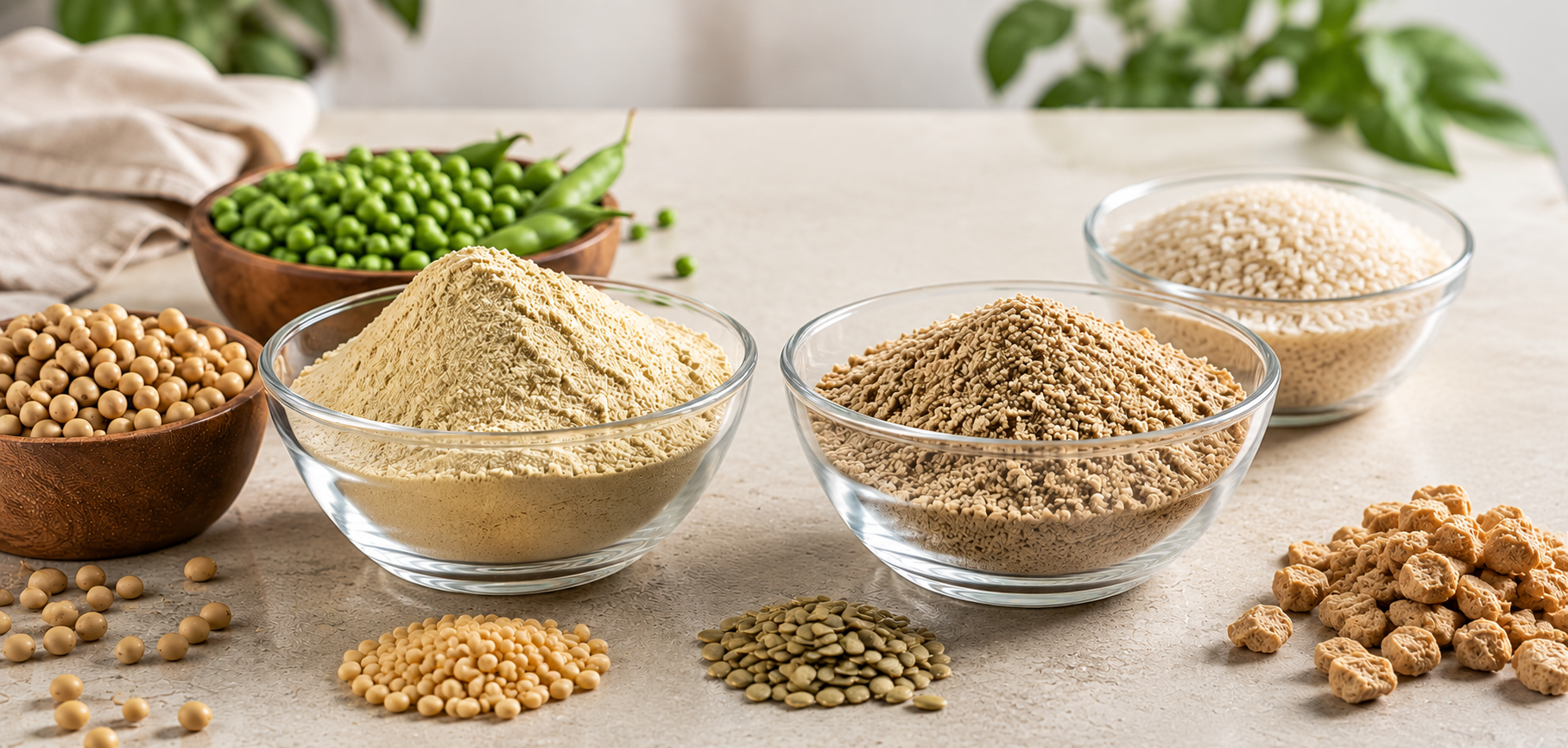
Vegetable proteins are intact or concentrated proteins derived from various plant sources. The most common are soy, pea, rice, wheat, oat, fava bean, chickpea and lentil. These ingredients are used primarily for their nutritional value. Their basic function is to increase protein content, improve nutritional profile and support structure.
Depending on the source and processing method, vegetable proteins can be in the form of concentrates, isolates or textured vegetable proteins. They are the foundation for products such as meat alternatives, protein beverages, sports nutrition, bakery products and many others. Their role is primarily functional and nutritional.
What Are Hydrolyzed Vegetable Proteins?
Hydrolyzed vegetable proteins are created through the process of hydrolysis, in which long protein chains are broken down into smaller peptides and amino acids. This process can be chemical, enzymatic or fermentation-based. The result is an ingredient with completely different characteristics from the original vegetable protein.
Unlike intact vegetable proteins, hydrolyzed vegetable proteins are not used primarily to increase protein content, but to improve sensory properties. During hydrolysis, amino acids such as glutamic acid are released, which provide umami flavor, a savory, meaty, subtle and pleasant taste reminiscent of soup or broth. This is why hydrolyzed vegetable proteins are indispensable in instant soups, seasoning blends, snacks, sauces, ready meals, and plant-based meat alternatives.
Why Are Hydrolyzed Vegetable Proteins Important?
One of the biggest challenges facing plant-based product manufacturers is consumer acceptance. Taste and texture are still cited as the main barriers to repeat purchase of plant-based products. Many plant proteins have off-notes of bitterness, grassiness, beaniness or astringency that can negatively impact the final product.
Hydrolyzed proteins can solve these problems in several ways. They enhance savory flavor, contribute umami notes, improve mouthfeel and help mask undesirable flavors. This is particularly useful in meat alternatives, ready meals, soups, snack seasonings, sauces and protein products. They are, in a way, the bridge between the nutritional value of plant proteins and the sensory experience consumers expect.
Functionality Comparison
When it comes to nutritional contribution, intact vegetable proteins remain the first choice. They provide protein, amino acids, contribute to satiety, develop texture and structure. Hydrolyzed vegetable proteins, although they contain amino acids and peptides, are usually used in smaller quantities and primarily for sensory, not nutritional, properties.
In terms of solubility, hydrolyzed proteins have an advantage. Hydrolysis improves solubility, dispersibility and stability at different pH values and temperatures. This makes them suitable for protein beverages, sports nutrition and functional drinks. Smaller peptides dissolve more easily and are less prone to precipitation, simplifying production.
Which Source to Choose?
Not all hydrolyzed vegetable proteins are the same. The protein source significantly affects the final flavor profile. Hydrolyzed soy proteins provide a strong umami, savory and meaty taste. Wheat hydrolysates have a mild savory character and rounded flavor. Corn hydrolysates bring subtle sweetness and balanced umami notes. Pea hydrolysates are gaining importance in plant-based formulations, while fava bean hydrolysates are only at the beginning of their journey. The choice depends on the desired profile and target application.
Challenges in Use
Although hydrolyzed vegetable proteins bring many benefits, there are also challenges. Excessive hydrolysis can lead to the formation of bitter peptides. Therefore, it is important to carefully control the degree of hydrolysis and the amount of added ingredient. Also, hydrolyzed soy and wheat proteins can be allergens, so it is necessary to pay attention to labeling. Finally, some consumers are still not familiar with these ingredients, so additional education or positioning in line with the brand strategy is needed.
How to Combine Them?
The greatest potential lies in combining both types of proteins. Vegetable proteins provide the nutritional foundation and structure, while hydrolyzed vegetable proteins contribute to taste, texture and sensory experience. When used together, they enable manufacturers to create products that are simultaneously nutritious, tasty and appealing to consumers.