
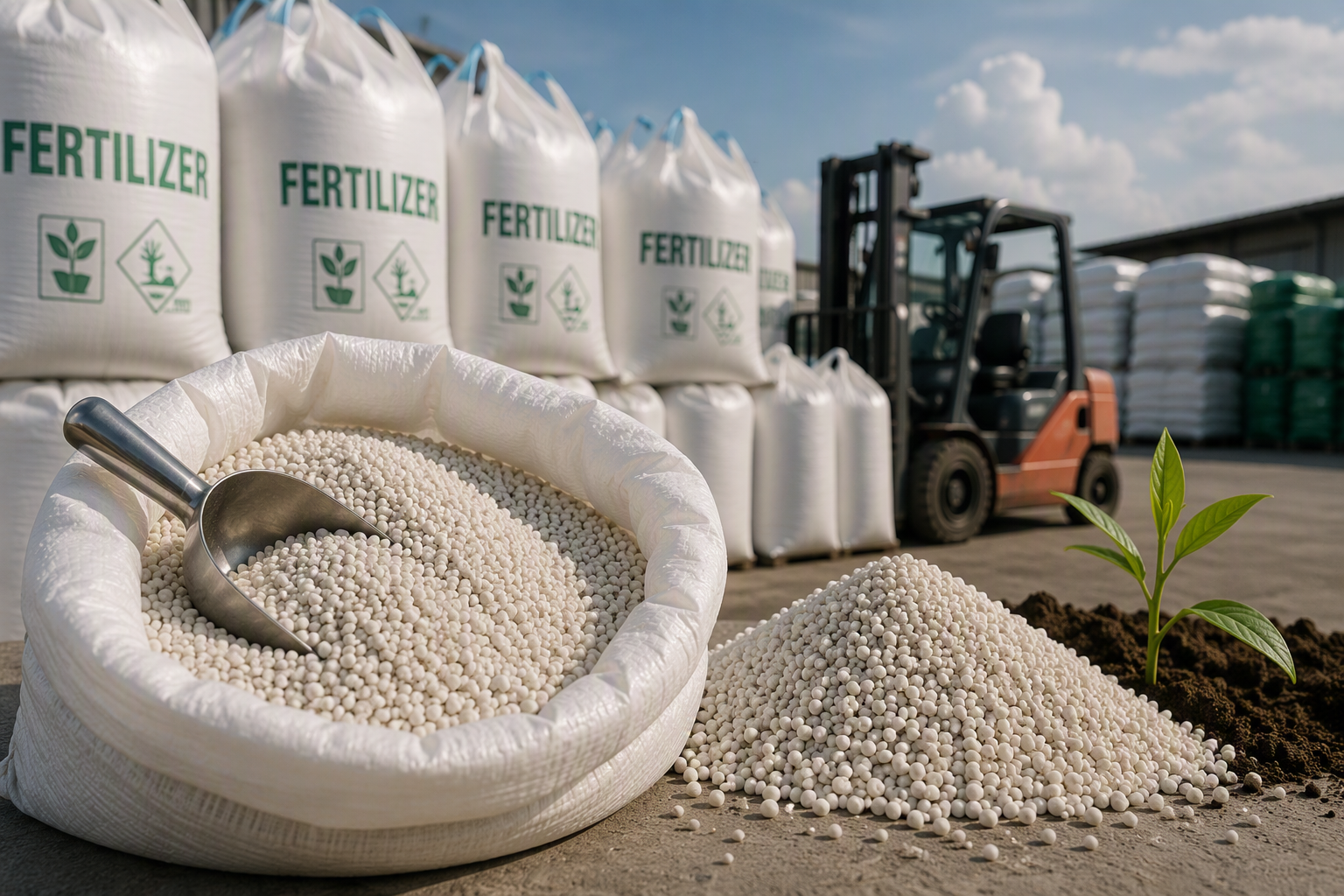
On 1 July 2026, the European Union tightened its customs regime on imports of nitrogen fertilisers from Russia and Belarus. The additional duty on certain categories rose from €40 to €60 per tonne, while for certain NPK categories it jumped from €45 to as much as €70 per tonne. On top of these amounts, depending on the tariff category, a basic customs duty of 6.5 percent is also applied. At the same time, the EU temporarily suspended duties on key nitrogen inputs, urea and ammonia, from other countries, with defined volume quotas. The goal is clear: to reduce dependence on Russian and Belarusian fertilisers and redirect procurement toward alternative suppliers. For European buyers, this is not just a change in duty rates, it is a signal that regional fertiliser flows are shifting, and with them, prices.
Which products are affected by the new duties?
The new customs regime is not uniform across all fertiliser types. Two basic categories are distinguished:
- Nitrogen fertilisers (urea, ammonium nitrate, calcium ammonium nitrate) - the additional duty rises from €40 to €60 per tonne. This category accounts for the largest share of Russian nitrogen fertiliser exports to the EU.
- Complex NPK fertilisers - the additional duty rises from €45 to €70 per tonne. This category includes various formulations (16:16:16, 10:26:26 and similar) used in arable farming.
On both categories, depending on the tariff code, an additional basic duty of 6.5 percent is also applied. This means the total customs burden is significantly higher than the additional duty itself.
Will the cost be fully passed on to buyers?
The question everyone is asking - who will pay this additional cost? Experience with previous customs measures shows that part of the cost is always absorbed by suppliers, especially when the market is competitive. However, in the current situation, several factors favour passing the cost on to buyers:
- Limited alternative supply - although the EU is seeking replacements, the capacities of alternative suppliers (Turkey, Egypt, Algeria, the US) are not sufficient to fully fill the gap.
- Rising production costs - natural gas prices, a key input for nitrogen fertiliser production, remain elevated.
- Geopolitical premium - Russian exporters are already accustomed to discounts due to sanctions, but they also have alternative markets (Asia, Africa) where they can sell their goods.
The largest portion of the cost is expected to be passed on to end‑users, especially in the first months of the new duties' application.
Which countries can take on part of the supply?
At the same time as raising duties on Russia and Belarus, the EU suspended duties on imports of urea and ammonia from other countries. This measure is designed to encourage supply diversification. Key potential suppliers include:
- Turkey - currently the most promising alternative, with growing production capacities and a favourable geographical position.
- Egypt and Algeria - significant producers of nitrogen fertilisers with access to Mediterranean routes.
- The US and Trinidad and Tobago - higher transport costs, but stable capacities.
- Qatar and Oman - the Middle East with growing production, but with longer transport routes.
The EU has also defined volume quotas for imports at preferential rates, meaning it will not be possible to fully replace Russian imports overnight. The diversification process will take months.
How are urea and ammonia flows changing?
The duty changes are already affecting flows. Russian and Belarusian fertilisers, which previously went to Europe, are now being redirected to other markets – primarily Asia, Africa, and South America. At the same time, European importers are being forced to seek alternative sources, leading to:
- Rising prices in Europe - the additional duty and logistics costs push up the import price.
- Redirecting flows to Mediterranean ports - instead of Black Sea routes.
- Increased interest in domestic production - European producers (Yara, BASF, Grupa Azoty) are gaining importance, but their capacities are limited.
Why global price declines do not necessarily mean the same decline in Europe
Although global fertiliser prices are declining, the European market is not fully following this trend. The reasons are multiple:
- Customs burden - an additional €60-70 per tonne directly raises the import price.
- Logistics costs - rising freight rates and insurance costs due to geopolitical risks in the Black Sea.
- Energy costs - although gas prices have fallen from their peaks, they remain higher than in other regions.
- Weaker competition - fewer suppliers in the European market reduces pressure on prices.
This means European buyers cannot count on the same price declines seen at the global level. The gap between European and global prices (the so‑called "EU premium") is likely to remain elevated.
Indirect impact on grains, animal feed and the food industry
More expensive fertilisers mean more expensive agricultural production. This cascades through the entire chain:
- Grains - higher production costs raise the minimum farm‑gate price for wheat and corn.
- Animal feed - rising grain and protein prices directly affect the price of meat and dairy.
- Food industry - more expensive raw materials ultimately lead to higher final product prices.
Although the impact is indirect and delayed in time, in the long term, more expensive fertilisers contribute to food inflation.
What does this mean for Serbia?
For Serbian buyers of fertilisers, it is important to understand that the EU duty does not apply directly to imports into Serbia. However, indirect effects are significant:
- Flow diversion - Russian fertilisers that previously could not enter the EU are now seeking alternative markets, which could increase supply in Serbia and the region.
- Price relationship changes - if the EU pays more for fertilisers, suppliers may seek higher prices in other markets as well.
- Logistics effects - changes in Black Sea routes could affect the availability and cost of transport to Serbia.
Buyers in Serbia should monitor developments but not expect a direct transfer of the duty to domestic prices.
Recommendations for procurement
- Monitor regional flows - what volumes of Russian fertilisers are being redirected towards the Balkans?
- Check origin - does your supplier import goods from Russia/Belarus or from other countries? How will the duties affect their price?
- Consider alternative sources -Turkey, Egypt and Algeria are becoming increasingly competitive.
- Plan ahead - supply diversification will not happen overnight. Start the process as early as possible.
- Monitor quotas - the EU has defined quotas for imports at preferential rates. These quotas could affect availability and price.
Conclusion
The new EU duty on Russian and Belarusian fertilisers, effective from 1 July 2026, is not just a technical change, it is reshaping regional trade flows, raising prices in Europe, and putting pressure on agricultural production. Although it does not apply directly to Serbia, the indirect effects are significant and require careful monitoring. For European buyers, the key message is: the global decline in fertiliser prices does not automatically mean a decline in Europe. Duties, logistics, and geopolitics are adding extra costs. For Serbian buyers, the message is: monitor changes, verify origin, and plan procurement ahead. Those who do so in time will have an advantage in the coming months.