
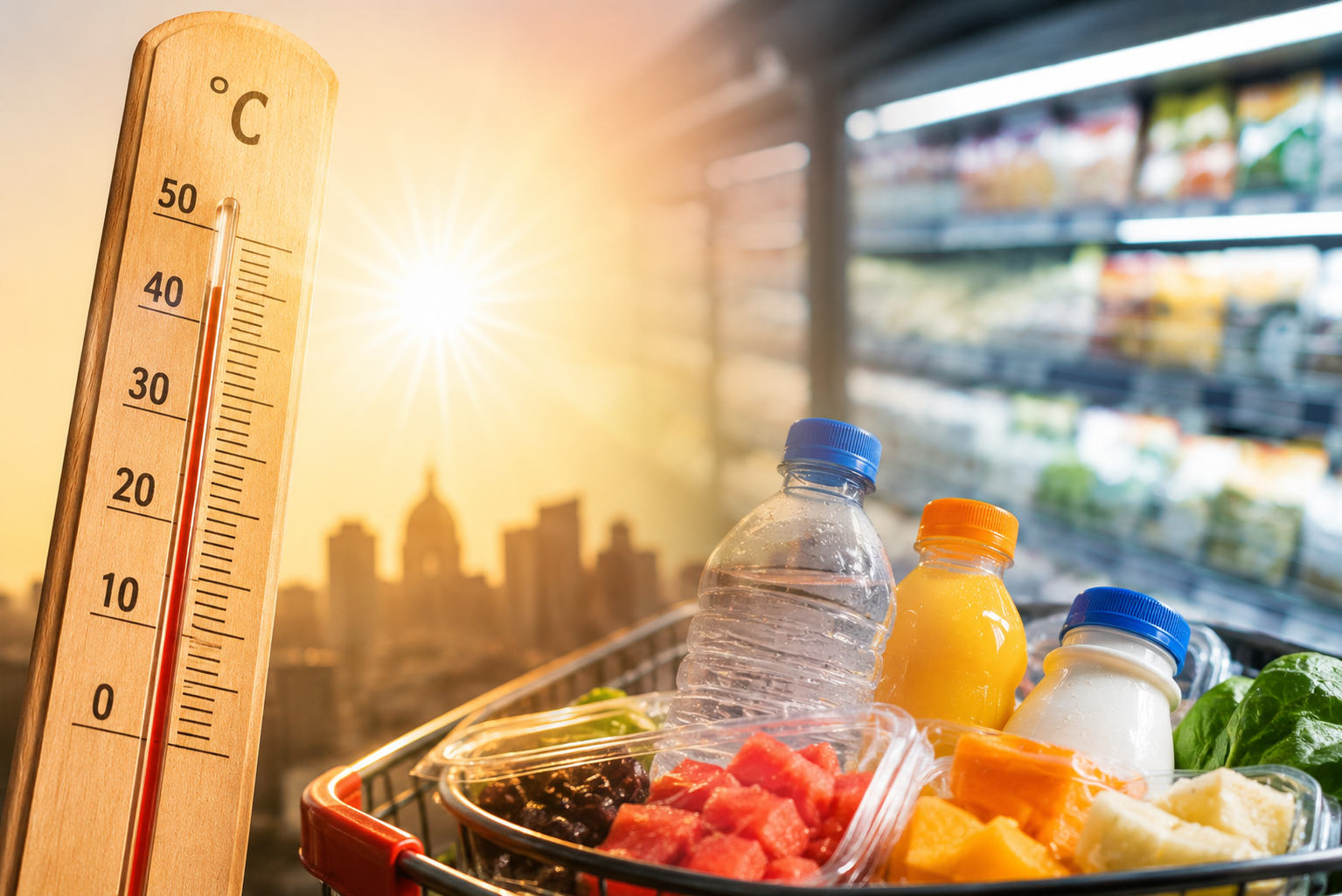
Summer heatwaves are no longer an exception – they’ve become a regular meteorological event that drastically changes consumer habits and the balance within the food sector. While some are filling shelves and rubbing their hands, others face serious logistical challenges and a drop in demand. Behind the seemingly simple equation of "it's hot – I'm buying refreshment" lies an entire chain of adaptation, from primary production to the checkout counter.
The first line of impact: temperatures don't just ask consumers
When food trends during a heatwave are discussed, people usually start with the shopping basket. However, much earlier – on farms, in production plants and in transport – a silent war against the heat is being waged. The dairy sector is perhaps the most sensitive here. High temperatures directly reduce feed intake in dairy cattle, lower milk yields, and, more insidiously, decrease milk fat and protein content. During last year’s heatwaves, data from the European Union showed a milk production drop of almost 2% at the level of major producers, which immediately drove up the prices of raw materials for cheese and butter.
Chocolate isn't spared either – and not because consumers lack the desire for it. Cocoa butter softens at just 34 degrees, creating headaches for manufacturers, distributors and retailers. Cold chain costs during transport and shelf display rise, and the risk of deformed or "bloomed" products forces many retailers to temporarily reduce orders or move chocolates into refrigerated display cases, where they compete for space with ice cream. Some large confectionery companies are investing in heat-resistant technologies that keep chocolate stable even at 38 degrees, but this is not yet a mass-market solution.
The paradox is that these hidden blows to the supply chain shape supply and pricing before the consumer even decides what to put in their basket.
Liquid gold: the battle for every sip
When the air becomes heavy and sticky, the body craves hydration – and this is where the water and functional beverage industry records the most spectacular jumps. Forget seasonal fluctuations: bottled water and isotonic drinks are slowly transitioning into year-round products, and heatwaves only accelerate that trend.
Interestingly, more and more consumers are distinguishing between plain refreshing water and advanced hydrating formulas. Sports drinks with electrolytes, once reserved for the gym, are now consumed at the beach, on a walk, or in an air-conditioned office. Research indicates that isotonic drinks now generate more than half of the revenue in the sports drink market, and hot days push that share even higher.
The local scene follows the global pulse: in Serbia and the region, a significant increase in sales of still water and low-calorie mineral drinks is noticeable during summer. There's also a psychological factor – in surveys, almost two-thirds of adults automatically associate bottled water with "good hydration," and more than half of those who drink it on the go highlight the weather forecast as their main purchase trigger. When a heatwave hits, a water bottle becomes a mandatory accessory alongside a phone and keys.
Kings of chilled pleasure: from cones to iced coffee
Then there are the categories that literally sizzle with joy when the thermometer goes wild – ice cream and iced beverages first and foremost. Ice cream doesn't just get a single wave of impulse purchases, but an entire extended season. Mild winters and early spring heat surges are increasingly erasing the traditional "ice cream season" boundaries of June to August. Manufacturers plan larger stocks and flexible distribution in advance, aware that the modern consumer will seek a premium scoop even when September is above-average warm.
However, the most spectacular turnaround is seen in the coffee market. All data tells the same story: as soon as the temperature crosses a certain threshold, hot beverages become a thing of the past. Analyses show that almost half of all coffee consumers switch to the iced version during extreme heat, and that percentage among younger generations (Millennials and Gen Z) goes above 70-80 percent. Transactional data from payment services last year recorded a growth in iced coffee purchases of over 130% during just a few days of a heatwave.
It's not just coffee. Everything chilled and fizzy – from non-alcoholic shandies, through iced teas to beer and cider – records a noticeable jump. A cold bottle on the go becomes the main summer meal-to-go, and carbonated fruit-flavored drinks are experiencing a second youth.
Where pots stay cold and bakeries stand empty
While the chilled zone flourishes, categories that require heat – whether in preparation or in the meal itself – fall to the background. Hot meals, soups, ready meals that need reheating and oven-baked goods face a sudden drop in interest. The logic is simple: when it's already hot enough without a hotplate, no one wants to turn on the oven or stand by the stove.
That's not just a feeling; the numbers confirm it. Well-known bakery chains in Europe have already issued profit warnings after unusually hot months, and their shares slid as much as 15 percent because consumers turned to salads, fresh fruit, sandwiches and chilled snacks. Even frozen pizzas are losing their breath – the idea of turning on the oven to 250 degrees in the middle of a heatwave seems attractive to very few.
It's interesting that the confectionery sector is not spared only on the logistics side; consumers naturally reduce demand for heavy chocolate bars and pastries, choosing colder alternatives such as ice cream, chilled puddings and fruit desserts. Heat, therefore, acts as a selective filter: everything that warms, whether the body or the room, stays on the shelf.
The new spice called "heat readiness"
In addition to the obvious shifts in the consumer basket, heatwaves are also creating a new trend – advance planning and investment in cooling infrastructure. Small retail outlets are increasingly investing in additional freezers on wheels that can be quickly rolled out to the entrance during heat surges. Delivery platforms record a huge increase in orders of ice cream and cold drinks for home delivery, but at the same time they must cope with shortened delivery windows before the product warms up.
And finally, it's worth mentioning a silent but important consequence: food waste. While consumers chase freshness and retailers heavily order fruit, vegetables and dairy desserts, the shelf life of these sensitive products during scorching days is measured in hours. Logistics and precise inventory management become key tools for preserving margins, and this is exactly where new business models are born – from dynamic price reductions near expiration dates to apps for quick resale of surpluses.
What to learn from the summer heat ring?
A heatwave is not just a meteorological phenomenon – it’s an economic event that redraws the daily consumption map. It's not necessarily about spending more money, but about redirecting the existing budget to categories that offer cooling, hydration, convenience and lightness. At the same time, those who depend on heat in preparation or are sensitive in the supply chain must play defensively – with cold rooms, more resistant formulations and smart assortment adjustments.
For food brands, the message is clear: your product not only needs to survive transport at 38 degrees, but also to appear in the consumer's eyes as exactly what feels good at the moment when the asphalt is sizzling. And that can be a surprisingly slippery slope – even for the biggest players.