
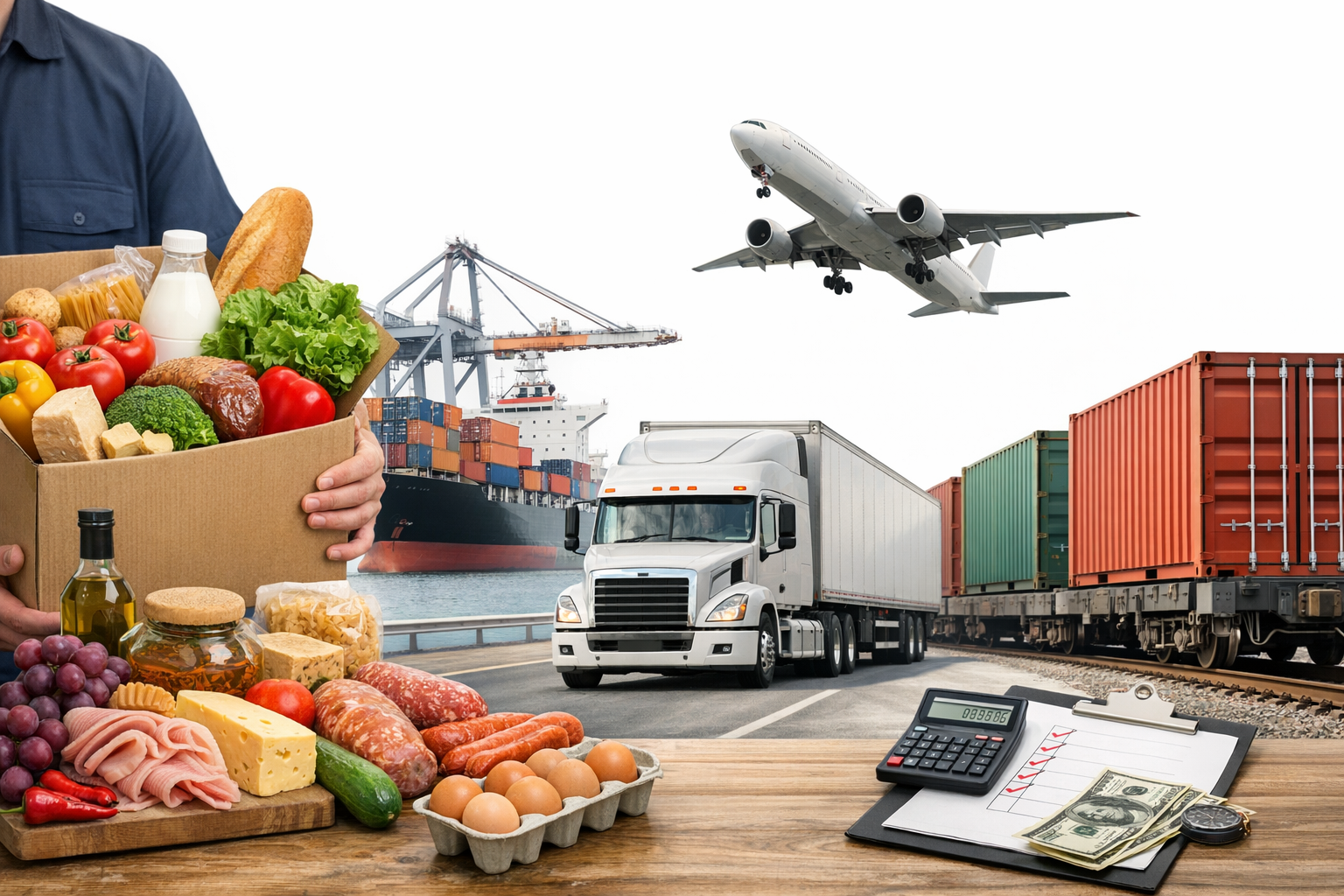
Transport is the silent link in the supply chain – it doesn’t appear on the product label, but it directly affects your margin, delivery reliability and even whether your line will run or stand still. Especially in the food industry, where raw materials are sensitive, lead times are tight and shelf life is limited, every change in transport quickly translates into cost and risk in procurement.
In the last few years almost everyone in the industry has felt what it means when freight rates double, trucks are unavailable for days, ports get congested or borders close overnight. The question is no longer “if” transport disruptions will happen, but “when” – and how prepared you will be.
How transport costs affect raw material prices
The price of a raw material on the invoice increasingly includes a significant portion of transport costs. What used to be a few percent of the total value can now reach 20–30% in some cases, especially for:
- imports from Asia, South America or Africa (cocoa, coffee, hydrocolloids, proteins, specialty additives)
- goods requiring cold chain (dairy ingredients, meat raw materials, enzymes, certain cultures)
- small-volume, high‑value raw materials shipped by air
When fuel prices, tolls, container shipping or warehouse charges rise, the supplier has two options: absorb part of the cost or pass it on to the raw material price. In practice this usually means:
- more frequent price list changes
- shorter validity of offers
- less willingness to fix prices for longer periods
For a food manufacturer this leads to:
- more difficult planning of sales prices and contracts with customers
- stronger pressure to optimize recipes and packaging
- the need for closer coordination between procurement, sales and finance in planning
Delivery reliability: delays, cancellations and unpredictability
Changes in transport affect not only cost, but also reliability. Even if you are ready to pay more, that doesn’t guarantee the goods will arrive on time.
The most common issues food manufacturers face are:
- lack of available trucks in peak season or crisis periods
- delays at borders and customs
- port congestion, container shortages and vessel schedule changes
- traffic bans or restrictions (holidays, weekends, roadworks)
- unforeseen events (strikes, extreme weather, political crises, closure of certain routes)
For you this increases the risk that:
- raw materials won’t arrive on time, forcing you to slow down or stop production
- you can’t meet committed delivery dates to your customers
- you pay extra: last‑minute transport, urgent deliveries, re‑packing, storage
In sectors such as dairy, meat or short‑shelf‑life products, these delays directly affect food safety as well – longer time in transit increases quality and microbiological risk.
Choice of transport mode and route: balancing cost and risk
A few years ago, the choice was often simple: the cheapest available transport. Today, more and more companies deliberately choose options that are not the cheapest but reduce risk:
- combined transport (sea + rail + truck) instead of solely road or sea
- shorter routes that cost more but are more reliable (avoiding “bottleneck” ports or borders)
- shifting from ocean to road or rail for critical raw materials where possible
- holding larger stocks in local warehouses and shipping less frequently but in larger lots
Every change in mode and route directly impacts:
- cost (more expensive transport or higher storage cost)
- lead time (faster but pricier, or slower but cheaper)
- risk (fewer transshipments, less handling, shorter exposure at critical points)
Manufacturers and suppliers need to jointly determine their “balance point” between cost and security of supply. For some key raw materials (e.g. a specific emulsifier, a certain protein, a unique enzyme preparation), it pays off to use a more expensive but more stable transport option rather than risk a production stop.
Impact on inventory planning and working capital
When transport is unpredictable, companies naturally react by increasing safety stocks. This has pros and cons:
Advantages of higher stocks:
- lower risk of production stoppages
- more flexibility in planning (less dependence on exact arrival dates)
- ability to leverage more favourable freight rates for larger shipments
Drawbacks of higher stocks:
- more working capital tied up in inventory
- need for more storage capacity (cold rooms, silos, warehouses)
- higher risk of expiry or quality degradation (especially in dairy, meat, confectionery)
- greater risk for raw materials exposed to regulatory change (e.g. some additives)
Transport volatility forces you to balance between “lean” and “safe” inventory. Many companies are shifting to a differentiated approach: minimal stocks for standard, easily available materials, and significantly higher safety stocks for critical components with no alternative supplier.
Sector‑specific effects within the food industry
Transport changes do not affect all sectors equally. For example:
- Bakery: often uses local or regional raw materials (flour, yeast, salt), but specialty additives, enzymes and emulsifiers are imported; transport strongly affects the cost and consistency of these inputs.
- Beverage industry: glass and PET packaging, CO₂, malt extracts and flavours can be highly sensitive to container freight disruptions and price spikes.
- Dairy: cold chain and time are critical – any transport extension affects microbiological status and quality; rising refrigerated transport costs directly lift finished product prices.
- Meat: imported raw materials and semi‑finished products (e.g. certain functional blends, proteins, spice mixes) increase risk; cold chain and sanitary conditions during transport are crucial.
- Savory products and confectionery: often depend on imported ingredients (cocoa, certain fats, spices, nuts, specialty starches and hydrocolloids); any disruption in sea and container transport hits costs hard.
Understanding which raw materials and supply chains are most sensitive in your case helps you decide where to invest more attention, planning and potential alternatives.
Role of suppliers and logistics partners
You cannot control global transport changes, but you can choose who you adapt with. Suppliers and logistics partners who:
- communicate openly about risks and possible delays
- propose alternative routes and modes of transport
- offer storage options closer to your plant
- announce transport price changes in advance and explain the impact on total raw material cost
become a key part of your procurement strategy. Conversely, partners who inform you of changes “at the last minute” and without explanation directly increase your operational risk.
What can manufacturers do?
Several practical steps can soften the impact of transport changes:
Map critical raw materials and routes
Identify materials coming from risky regions or relying on a single transport mode (e.g. sea only). Consider higher stocks, alternative suppliers or backup routes for those.
Tighter cooperation between procurement, logistics and R&D
Technologists need to know how exposed procurement is, and vice versa – sometimes a small recipe change can switch to a raw material with a more stable supply chain.
More flexible contracts with suppliers
Contracts that allow adjustments in transport terms, partial deliveries, shipment consolidation or storage at the supplier’s site can reduce overall cost and risk.
Scenario planning
Develop “what if” scenarios – what if lead time increases by two weeks, if freight rates rise 20%, if one route is closed. It’s better to have a draft plan before a crisis than to improvise in the middle of it.
Transport disruptions are no longer an exception but the new normal. How much they affect your cost and supply reliability depends on how well you understand your own supply chain and how closely you cooperate with suppliers and logistics partners. In the food industry, where every unplanned stop is costly, investing time into understanding and managing transport risks is becoming just as important as choosing the right raw material itself.