
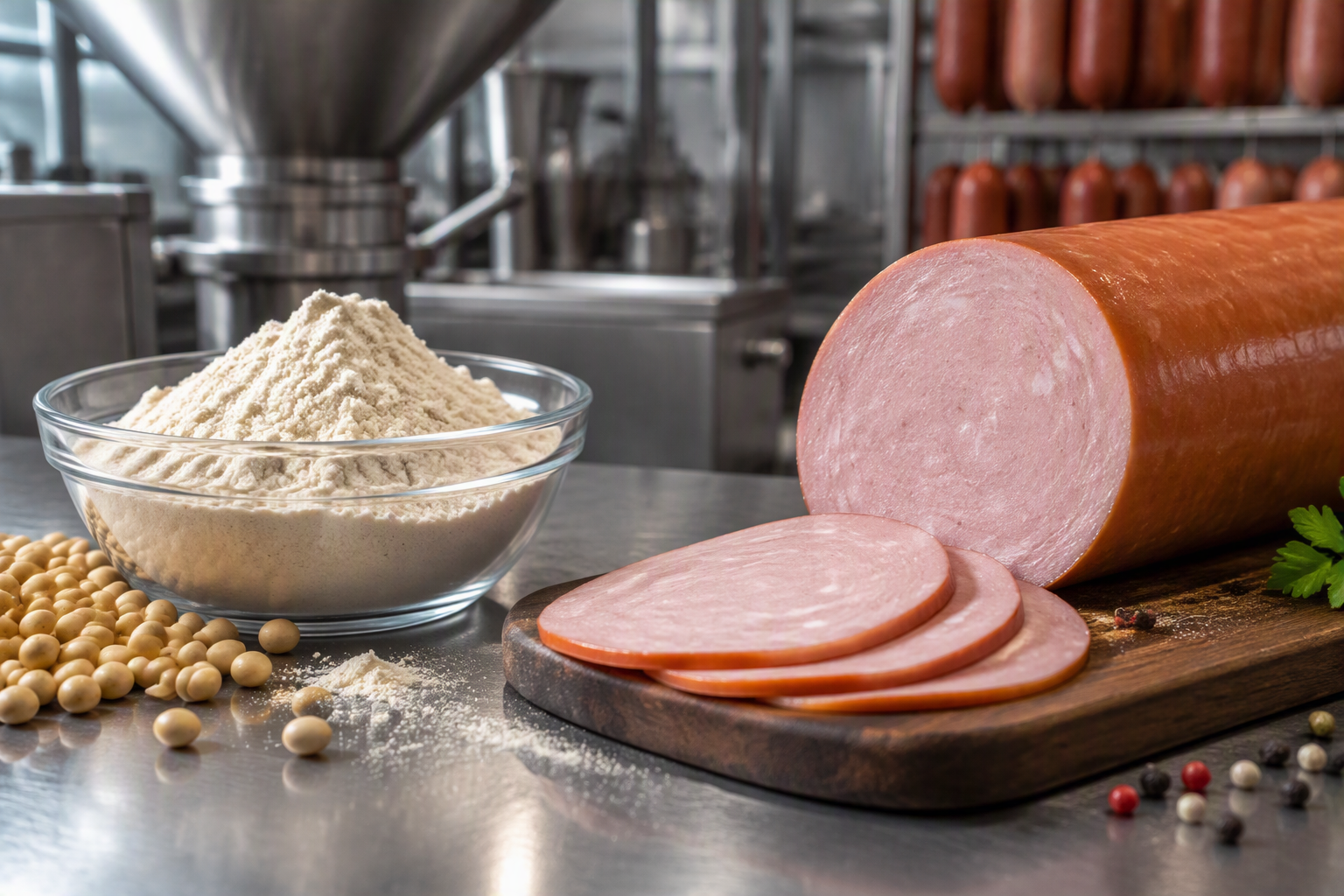
In the meat industry, every gram of expensive animal fat and protein must justify its place in the recipe. When raw material prices rise, manufacturers naturally turn to solutions that increase yield, most often through the addition of water and cheaper plant proteins. This is where the biggest challenge of modern production arises. How do you bind additional water while preserving the juicy, full, and natural bite that consumers expect?
Soy protein isolate (SPI) has long been criticized as a cheap filler, but technologists who know how to use it properly see it as a precise tool for managing texture and emulsion stability.
Why Isolate Is Not Just a Filler
What sets SPI apart from soy flour or concentrate is its high purity (usually over 90 percent protein) and exceptional functionality. In meat emulsions, such as sausages, frankfurters, and pâtés, the isolate acts on three fronts. First, it is a strong emulsifier that coats fat droplets and prevents their separation during thermal processing. Second, it has an exceptional water binding capacity. Third, during heating, it forms a firm gel that provides the necessary cohesion to the product.
If used improperly, SPI can make the product rubbery or dry. If used correctly, it retains juiciness and allows for a significant reduction in recipe costs.
Hydration Is Key
The most common mistake in production is adding dry powder directly to the meat mass. Soy isolate must be thoroughly hydrated before it enters the emulsion. The optimal ratio for hydration is usually one part isolate to four or five parts ice water.
The water used for hydration must be in the form of ice or very cold. This prevents premature swelling of the proteins and maintains a low mass temperature. When the isolate is properly hydrated, it forms a thick, creamy paste that is then evenly distributed through the meat emulsion, binding additional water without any sandy or lumpy sensation in the final product.
Temperature Control Saves the Emulsion
Meat emulsion is a sensitive system. When meat, fat, water, and soy isolate are mixed in the bowl cutter, friction generates heat. If the mass temperature exceeds 12 to 14 degrees Celsius, the emulsion breaks down, fat begins to separate, and proteins lose their ability to bind water. The result is a dry and crumbly product after baking or cooking.
That is why the addition of hydrated isolate must take place under strictly controlled conditions. Ice is often used instead of part of the water for hydration to maintain coldness throughout the chopping and mixing process. Maintaining low temperature is an absolute priority if you want to preserve juiciness.
Stages of Inclusion in the Process
The order of ingredient addition directly affects how effective the isolate will be. Best practice dictates that hydrated isolate is added together with raw meat and salt in the early mixing phase. Salt and metal ions help proteins dissolve and form a network. Fat is added later, when the protein network is already formed and the isolate has already taken on the role of emulsifier.
In some recipes, especially fine pâtés where texture is extremely important, part of the isolate is added as a pre-prepared gel. This gel is made by mixing isolate and water with gentle heating to form a firm structure, and then cooling it before adding to the mass. This approach provides additional stability and softness to the product.
Impact on Sensory Properties
Although SPI is functionally powerful, it must not compromise taste. Soy carries specific beany notes that in meat products can be masked by spices, smoke, or yeast extracts. However, in products with a mild flavour profile, such as some types of chicken or fish sausages, the amount of isolate must be carefully dosed.
Good practice is to combine SPI with other binders, such as starch or hydrocolloids, to reduce the required dose of isolate while maintaining functionality. This avoids excessive dominance of soy flavour while keeping yield high.